Humanity's Oldest Culinary Signature: 14,400-Year-Old Archaeological Excavations at Shubayqa and the Origins of Bread
Shubayqa 1
-
Curator's note
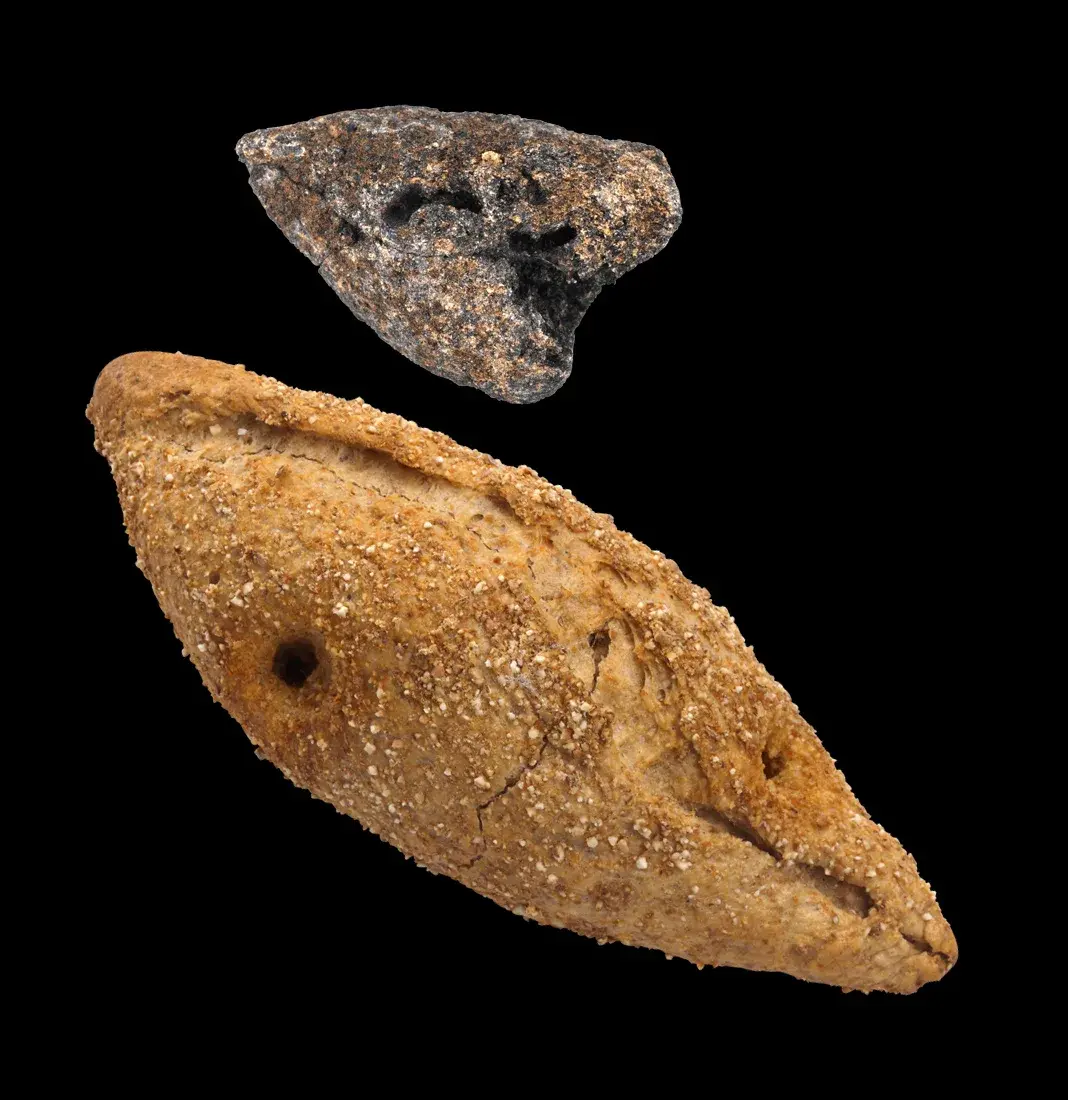
Certain discoveries in archaeology do more than unearth ancient stone and bone; they fundamentally reshape the foundational narratives of human history. Archaeological excavations in the Qa' Shubayqa basin, situated within the basalt desert of northeastern Jordan, achieved precisely such a paradigm shift. Approximately 14,400 years ago—at least 4,000 years prior to the advent of Neolithic agriculture and crop domestication—Natufian hunter-gatherers ground wild cereals and wetland tubers to bake the world's oldest known bread in a central stone hearth of a semi-subterranean basalt structure.
From the vantage point of material culture analysis and prehistoric craft, this discovery represents far more than an early footnote in culinary history. Bread stands as one of humanity's earliest "gastronomic design objects"—a deliberate product formed by human hands transforming raw environmental materials into a crafted, baked, and socio-culturally significant foodstuff.
A Natufian Oasis in the Black Desert: The Shubayqa Excavations
The Harrat ash-Shaam (Black Desert) of northeastern Jordan, which today receives fewer than 100 millimeters of rainfall annually, was a vibrant wetland refugium during the Late Pleistocene. Fed by seasonal runoff from the Jebel Druze highlands, the Qa' Shubayqa basin encompassed freshwater lakes, extensive marshes, migratory waterfowl, and abundant herds of wild gazelles.
Excavations at Shubayqa 1, directed by Dr. Tobias Richter and Dr. Amaia Arranz-Otaegui of the University of Copenhagen, directly challenged the long-standing "Core Zone Hypothesis" of Levantine archaeology. For decades, scholars posited that Natufian culture and sedentary lifestyles originated exclusively within the Mediterranean oak woodland zones of Mount Carmel and the Galilee. However, high-resolution Accelerator Mass Spectrometry (AMS) radiocarbon dates analyzed by Prof. Elisabetta Boaretto at the Dangoor Accelerator Mass Spectrometry (D-REAMS) laboratory at the Weizmann Institute of Science demonstrated that Shubayqa 1 was established around 14,600 cal BP, making it fully contemporaneous with Natufian sites in the Mediterranean core.
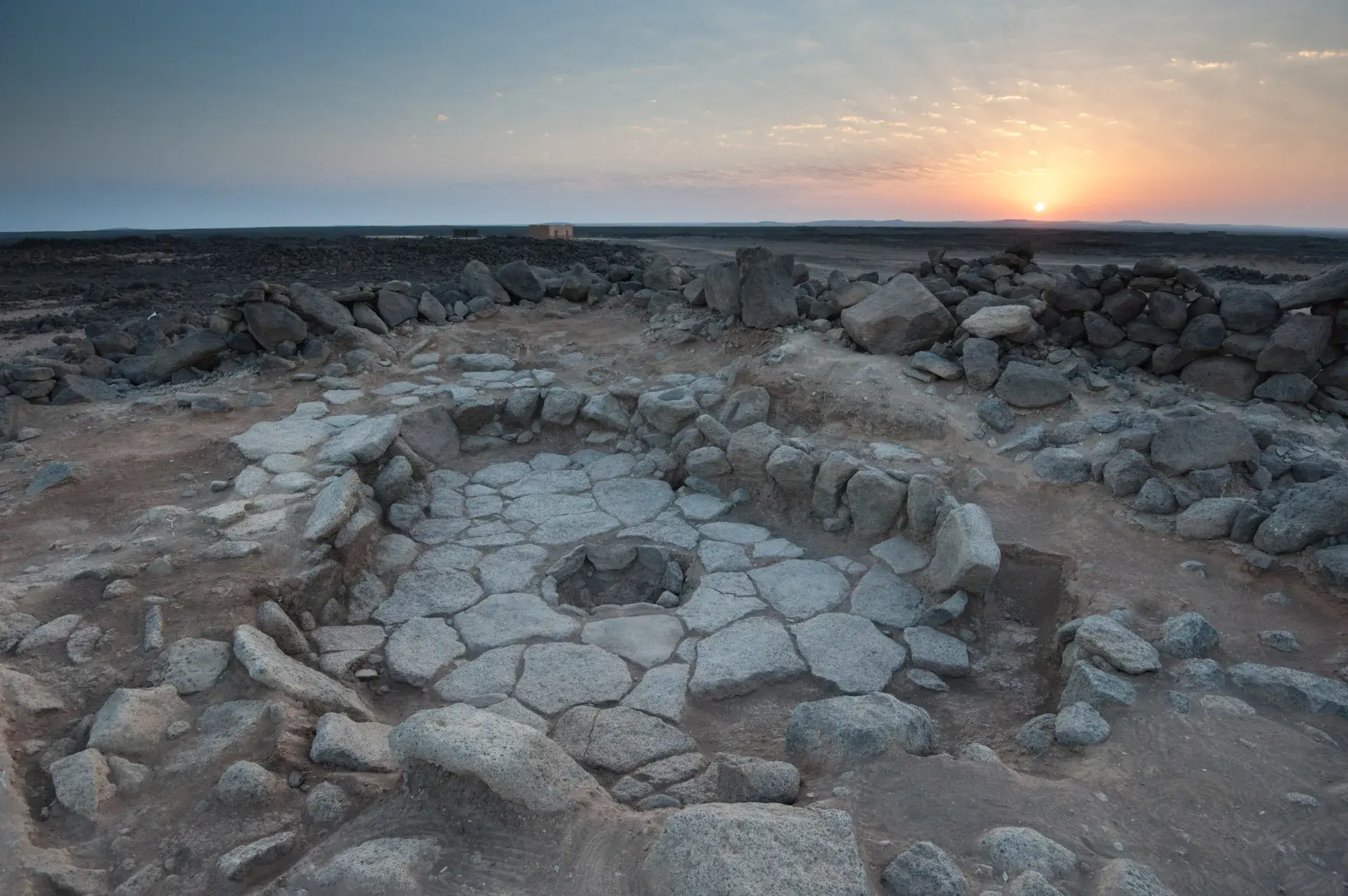
The semi-subterranean circular architecture uncovered at Shubayqa 1 highlights early innovations in spatial design and construction:
- Structure 1 Architecture: Features wall foundations constructed from upright basalt slabs and a pavement composed of carefully fitted, smooth basalt flagstones.
- Central Stone Hearth: Positioned at the center of Structure 1, a circular, stone-lined hearth approximately one meter in diameter preserved one of the most remarkable archaeobotanical assemblages in prehistoric archaeology.
Crafting the First Loaf: The Operational Chain (Chaîne Opératoire)
Bread-making is not a casual gathering activity; rather, it demands sophisticated planning, labor investment, specialized equipment, and a multi-stage operational chain (chaîne opératoire). Analysis of more than 65,000 charred plant remains and 642 microscopic bread-like fragments recovered from the hearth at Shubayqa 1 reveals an extraordinary level of technical expertise among Natufian foragers.
Step-by-Step Reconstruction of Pre-Agricultural Bread Production
- Foraging and Botanical Selection: Natufian harvesters collected wild einkorn wheat (Triticum boeoticum), wild barley (Hordeum spontaneum), and wild oats (Avena sp.). In addition, they harvested tubers of the sea club-rush (Bolboschoenus glaucus) from the surrounding wetlands. The recovery of over 50,000 tuber fragments indicates that these underground storage organs provided essential starch, natural sweetness, and binding capacity to the dough matrix.
- Dehusking and Thermal Pre-treatment: To facilitate the removal of tough glumes from wild grain spikes, harvested seeds were subjected to gentle heating. Over 46 percent of analyzed grain fragments exhibited characteristic heat-induced swelling and deformation.
- Pounding, Grinding, and Sifting: The parched grains and dried tubers were pounded in heavy basalt mortars and subsequently ground into flour on basalt grinding slabs. Micro-structural analysis confirms that the flour was sifted to an impressive fineness of approximately 600 micrometers (µm), effectively separating coarse, fiber-rich chaff from the fine starch particles.
- Kneading and Dough Matrix Preparation: The sifted flour was mixed with water to form a smooth, unleavened dough matrix.
- Baking: Predating ceramics and ovens by several millennia, the dough was baked directly onto heated basalt hearth stones or nestled within hot embers to produce flatbreads.
Microscopic Analysis: SEM Investigation of the Ancient Bread Matrix
Scanning Electron Microscopy (SEM using a Hitachi S-3400N) conducted at University College London laboratories under the supervision of PhD candidate Lara González Carretero and Prof. Dorian Fuller established conclusively that the charred fragments were not burnt soup remnants or porridge crusts, but an authentic bread matrix.
The analyzed charred crumbs averaged 4.4 mm in width, 2.5 mm in height, and 5.7 mm in length. Microscopic criteria identified in the matrix include:
| Analytical Parameter | Microscopic Findings and Technical Significance |
|---|---|
| Starch Gelatinization | Pervasive starch gelatinization caused by the combined action of moisture and heat during baking. |
| Starch Cell Hilums | Dilated cell hilums reflecting mechanical disruption during pounding in stone mortars and grinding on basalt slabs. |
| Matrix Porosity | Microscopic void space ranging strictly between 5 percent and 10 percent of the total matrix volume. |
| Pore Dimensions | Closed gas bubble diameters measuring between 0.05 mm and 0.25 mm. |
| Product Identification | The low-porosity profile confirms a cooked, unleavened flatbread baked on hot stones, rather than beer sediment or boiled porridge. |
Reversing the Neolithic Paradigm: Did Bread Drive Agriculture?
Traditional archaeological models held that bread was a late byproduct of Neolithic sedentary farming, emerging only after wheat and barley had been fully domesticated and produced agricultural surpluses. The findings from Shubayqa 1 invert this historical timeline.
Processing wild cereals is an immensely labor-intensive endeavor: gathering brittle wild spikes, dehusking, hand-grinding flour on stone slabs, and baking require significant energetic investment for a modest yield. That Natufian hunter-gatherers undertook this complex process 4,000 years prior to farming indicates that bread was not an everyday staple, but a highly valued prestige food utilized in communal feasting and social rituals.
This insight presents a revolutionary perspective on human prehistory: Did humans cultivate crops because they had settled into farming, or did they domesticate wild grains because they developed a taste for bread? The Shubayqa 1 evidence strongly indicates that the socio-cultural desire for bread acted as an economic and cultural incentive, driving hunter-gatherers to manage, cultivate, and eventually domesticate wild grasses during the transition to the Neolithic era.
Material Culture, Lithic Craft, and Social Context
The Shubayqa settlement complex (including Shubayqa 1 and the later PPNA site of Shubayqa 6) yields insights extending beyond archaeobotany into Natufian material culture and ritual practices:
- Dual-Function Basalt Artifacts: Excavations recovered over 800 ground stone basalt tools. Microscopic residue analysis revealed traces of red ochre on many grinding implements, demonstrating that stone mortars served a dual purpose: processing plant foods and grinding mineral pigments for body decoration, hide treatment, or burial ceremonies.
- Architectural Burials and Ritual Space: The discovery of infant burials beneath the paved basalt floors of Structure 1 and Structure 2, alongside bones treated with red ochre, demonstrates that dwellings were not merely utilitarian shelters, but symbolic spaces intertwining domestic life, food preparation, and ancestor veneration.
- Hunting Dynamics and Animal Integration: Faunal studies directed by Dr. Lisa Yeomans and Dr. Louise Martin show that Natufian communities hunted goitered gazelles using stone-walled traps known as "desert kites," harvested migratory waterbirds, and integrated early domesticated dogs (Canis familiaris) as hunting partners. At Shubayqa 6, limestone human figurines and greenstone bead manufacture show the continuity of these craft traditions into the early Neolithic.
Related links
- Wikipedia: Humanity's Oldest Culinary Signature: 14,400-Year-Old Archaeological Excavations at Shubayqa and the Origins of BreadSuggesteden.wikipedia.org
- Wikipedia: -Suggesteden.wikipedia.org
- Openly licensed images (Wikimedia Commons)Suggestedcommons.wikimedia.org
- On the map: JordanSuggestedopenstreetmap.org