Why a 5,000-Year-Old Grain Might Just Save Our Food Supply
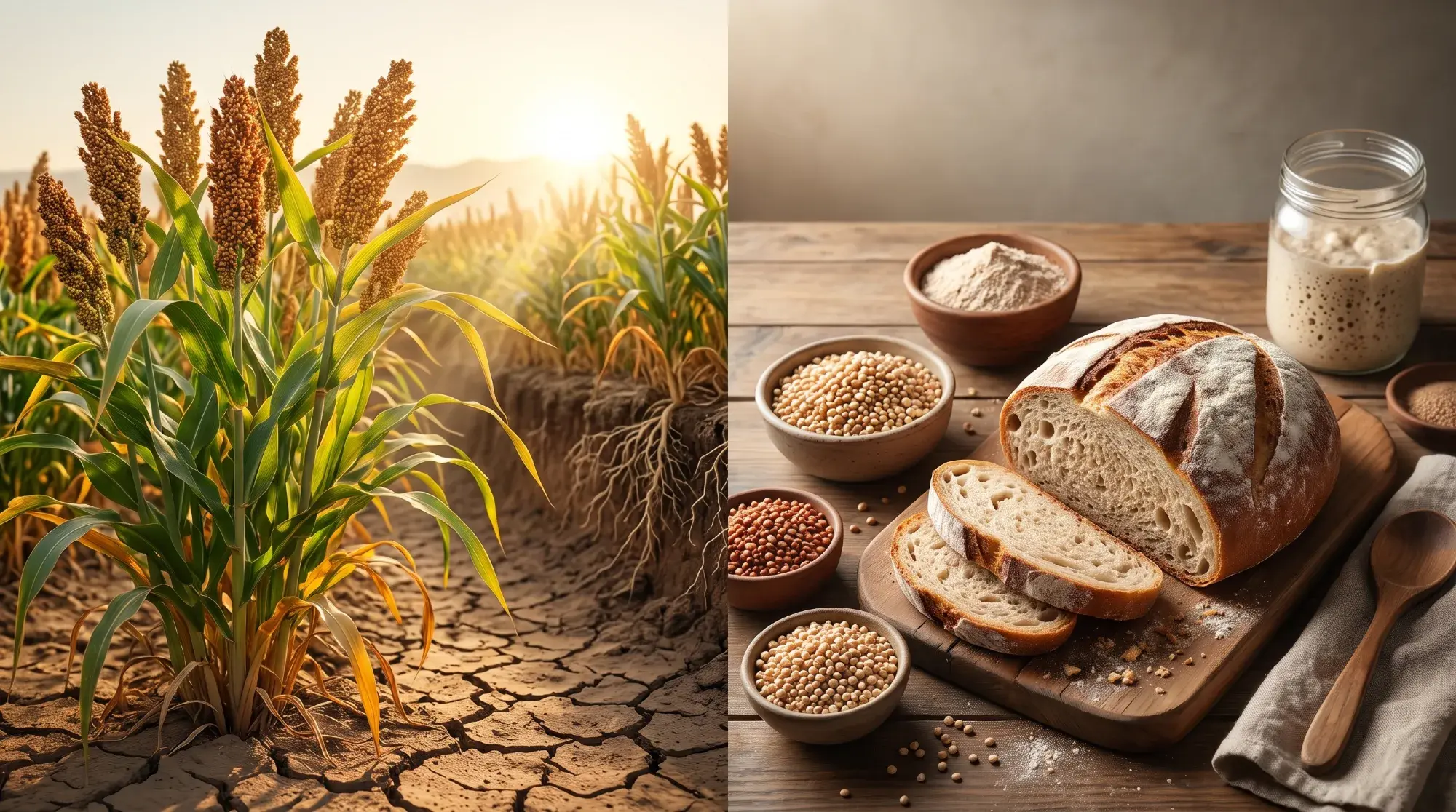
With extreme droughts hitting farmlands and gluten intolerance on the rise, the way we produce and eat food is undergoing a massive shift. Sitting right at the heart of this revolution is sorghum (Sorghum bicolor). First domesticated in East Africa somewhere between 3000 and 5000 BC, this ancient grain is currently the fifth most produced cereal on Earth just behind wheat, corn, rice, and barley. But more than just a staple crop, it’s proving to be a game-changer for both sustainable farming and modern health.
Built to Survive the Climate Crisis
So, how does sorghum thrive in conditions that would wither most other crops? It all comes down to its specialized C4 photosynthetic pathway.
Think of it as a super-efficient engine: it allows the plant to trap carbon dioxide far more effectively under intense heat and bright sunlight. When water gets scarce, sorghum simply rolls its leaves inward to lock in moisture and cut down on evaporation. Beneath the surface, its extensive root network—fortified with natural silica deposits keeps its cell walls from collapsing during severe droughts. In a warming world with dwindling water supplies, these traits make sorghum one of our most strategic allies.
Naturally Gluten-Free, Packed with Antioxidants, and Easy on Blood Sugar
From a nutritional standpoint, sorghum brings a lot to the table:
- 100% Gluten-Free: Its primary storage protein is kafirin, making it entirely safe for anyone with celiac disease or gluten sensitivity.
- Loaded with Antioxidants: Darker varieties are packed with powerful plant compounds like condensed tannins, 3-deoxyanthocyanins, and phenolic acids. At a cellular level, these act like a clean-up crew against free radicals.
- Steady Energy Release: Thanks to its high fiber, resistant starch, and unique tannin-starch structures, sorghum digests slowly. With a predicted glycemic index around 74 (much lower than polished rice), it helps prevent sudden blood sugar spikes.
Unlocking Its Potential: The Magic of Sourdough Fermentation
Raw sorghum does have a catch: naturally occurring phytates and dense tannins tend to bind to essential minerals like iron, zinc, calcium, and magnesium, making them harder for your body to absorb. They can also make the protein harder to digest.
Luckily, traditional African kitchens solved this centuries ago through sourdough fermentation a technique used to make staples like Injera, Kisra, and Ogi.
During fermentation, friendly lactic acid bacteria (like Lactobacillus plantarum) lower the pH, activating enzymes that break down phytates by 45% to 100%. This unleashes the trapped minerals and makes the proteins far more digestible. As a bonus, these beneficial bacteria produce natural compounds (exopolysaccharides) that work like natural baking improvers. They give gluten-free sorghum breads a softer crumb, better volume, and smooth out any bitter or astringent flavor notes.
Sources
- Baking qualities of Bulgarian sorghum genotypes (Sorghum bicolor L. Moench)
- The Biology of Sorghum bicolor (L.) Moench subsp. bicolor (Sorghum) - Office of the Gene Technology Regulator
- Sorghum (Sorgum) Tahılı: Botaniği, Tarihsel Evrimi, Besinsel Değeri ve Ekmek Biyoteknolojisindeki Rolü
- African cereal-based fermented foods: Microbiota, functional microorganisms, starter cultures and nutritional properties - ResearchGate
Keep reading
All postsEffect of Steam on Bread
Baking is fundamentally a thermodynamic phase-change process in which a viscoelastic dough foam is converted into a stable, porous crumb structure…
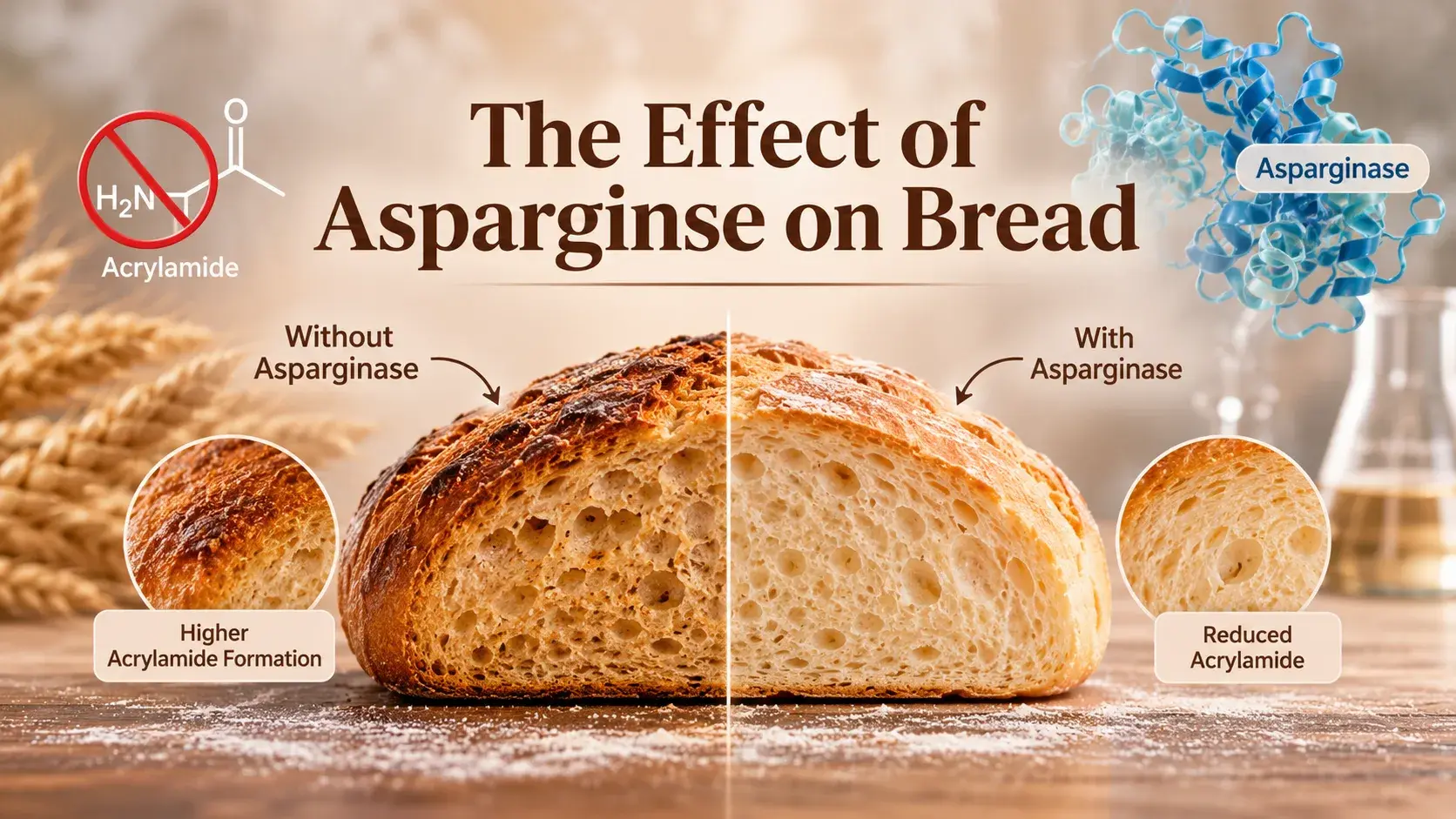
Effect of Asparaginase on Bread
The discovery of acrylamide in thermally processed, carbohydrate-rich foods transformed industrial cereal chemistry.

Is Dough a Liquid or a Solid? Physics of Herschel–Bulkley & Non-Newtonian Flow
When you look at a loaf of dough sitting on a baker’s bench, what do you see? A solid mass that holds its shape and can be molded by your hands?