Effect of Steam on Bread
Baking is fundamentally a thermodynamic phase-change process in which a viscoelastic dough foam is converted into a stable, porous crumb structure surrounded by a crisp, protective crust. Among the operational variables in bread production, the introduction of water vapor into the baking chamber commonly referred to as oven steam plays a decisive physical and chemical role. While steam injection is indispensable for artisan hearth breads, crusty baguettes, and European rolls, its necessity and precise dosage are governed by strict thermodynamic laws, biochemical transformations, and equipment designs.
Many bakers from those in industrial-scale operations to artisanal establishments—tend to perceive steam merely as a superficial visual tool used to add a sheen to the bread crust. In reality, when viewed through the lens of thermodynamics and food engineering, oven steam is a vital process component: it re-establishes the psychrometric equilibrium of the oven atmosphere, instantly transfers the immense latent heat generated by the phase change of water molecules on the dough's surface to that surface, governs the transformation kinetics of starch and protein polymers, and directly influences the energy efficiency of the oven.
Is Steam Truly Necessary in Bread Baking?
To evaluate the necessity of oven steam, one must separate bread varieties into two distinct structural and sensory categories: hearth-baked crusty breads and soft pan/tin breads.
Hearth Breads (Baguettes, Ciabatta, Boules, Batards): Steam is Mandatory Requires maximum volume expansion (oven spring), a thin glassy crackling crust, ear/grigne expansion, and surface blistering.
Pan and Tin Breads (Pullman Loaves, Soft Sandwich Breads): Steam is Optional or Minimal Requires soft, flexible, thin sidewalls, a pale or uniform thin crust, and even crumb porosity without hard crust shell formation.
Hearth breads baked directly on refractory deck stones or perforated trays require low relative humidity in the final baking phase but high initial humidity. Without steam, the hot dry air inside the baking oven rapidly evaporates surface moisture from the cold dough. This premature drying forms a rigid, inelastic skin within the first two minutes of baking. When internal gases (, water vapor, and ethanol) expand under heat, the rigid skin resists expansion, causing internal gas pressure to rupture the loaf at its weakest structural seam, producing misshapen loaves, dense crumb structures, dull greyish crusts, and aborted score line ("ear") expansion.
Conversely, soft pan breads (such as Pullman loaves or enriched sandwich breads) are baked in enclosed tins or pans, often covered with lids. The dough itself releases sufficient water vapor within the confined pan volume to maintain skin flexibility. Injecting high amounts of external steam into pan bread ovens can cause sidewall softening, structural collapse ("keyholing" or concavity), and soggy crusts. Therefore, steam necessity is not universal; it is dictated by the desired crust fracture, volume expansion, and surface gloss.
Thermodynamic Principles and Heat Transfer Dynamics
The introduction of steam into a baking chamber fundamentally alters the primary heat transfer mechanism from thermal radiation and dry air convection to rapid latent heat condensation.
When cold dough at an internal temperature of to is loaded into a hot oven operating at to , the surface temperature of the dough is well below the dew point of the humidified oven atmosphere. As low-pressure saturated steam enters the chamber, water vapor molecules instantly condense onto the cool dough skin.
Biochemical and Physical Mechanisms on Dough Structure
The thin moisture film deposited by steam condensation triggers a sequence of biophysical and enzymatic events that determine loaf volume, crust texture, sheen, and score development.
- Steam Injection Phase: Saturated vapor condenses on cold dough skin ().
- Skin Hydration Phase: Liquid water film forms, maintaining skin elasticity and preventing premature crust setting.
- Oven Spring Phase: Internal gas expansion (, water vapor, ethanol) expands the extensible envelope; scored cuts open smoothly.
- Gelatinization Phase: Surface starch absorbs condensed water and gelatinizes between and .
- Dextrinization Phase: Exhaust dampers open; high heat pyrolyzes gelatinized starch into soluble pyrodextrins.
- Maillard & Caramelization Phase: Reducing sugars and amino acids react at , yielding a thin, golden, crackling crust.
Extending Skin Elasticity and Maximizing Oven Spring
During the first 3 to 6 minutes of baking, internal dough temperatures rise from toward . This temperature rise causes three simultaneous physical expansions:
- Carbon dioxide gas dissolved in the aqueous phase comes out of solution and expands according to Charles's Law.
- Water and ethanol evaporate, creating high internal vapor pressures.
- Yeast experiences a final burst of metabolic activity before reaching its thermal death point at .
By keeping the skin wet and elastic, steam condensation allows the dough envelope to stretch without tearing, yielding maximum volumetric expansion (oven spring).
Score Line Expansion and Enzymatic Window
When bread dough is slashed (scored) prior to loading, the cuts serve as intentional stress-relief vents. Moisture condensation lubricates these cuts, allowing them to pull apart smoothly and form a crisp, raised flap known as the ear or grigne.
Furthermore, steam extends the operational window of endogenous -amylase enzymes at the surface. As long as liquid moisture is present and surface temperatures remain below , -amylase continues cleaving damaged starch granules into low-molecular-weight dextrins, which feed subsequent browning reactions.
Starch Gelatinization and Thermal Dextrinization
Starch granules on the dough surface undergo irreversible gelatinization between and in the presence of condensed water. The starch granules absorb the surface liquid, swell, lose their crystalline structure, and coalesce into a clear, continuous liquid gel film.
As baking progresses beyond 6 to 8 minutes, steam injection ceases and the oven exhaust dampers are opened. As the surface water evaporates, the temperature of the gelatinized starch film rises above up to . At these elevated temperatures, the gelatinized starch undergoes thermal pyrolysis into pyrodextrins. When dry, these short-chain dextrins cool into an ultra-thin, brittle, glassy film responsible for the characteristic "shatter-crisp" crackle and high visual sheen of baguettes and hearth loaves.
Maillard Reaction, Gluten Denaturation, and Crust Thickness
If bread is baked in dry air from the start, surface gluten proteins denature rapidly (), and Maillard reactions between reducing sugars and free amino acids begin prematurely at lower overall volume. Steam delays Maillard browning () and caramelization () by keeping surface temperatures clamped at (the boiling point of water) as long as free surface moisture remains.
Once the steam is vented, browning proceeds rapidly on the pre-gelatinized, dextrin-rich surface. This temperature control produces a thin, crisp, delicate crust rather than a thick, tough, leathery skin.
4. Engineering Calculations and Operational Parameters
In commercial and industrial baking, steam application is governed by thermodynamic state variables: pressure, temperature, quality, and volumetric supply rate.
Saturated Steam vs. Superheated Dry Steam
A common industrial error is injecting superheated (dry) steam into the baking chamber.
- Saturated Low-Pressure Steam (, ): Wet vapor with a high condensation rate. Instantly forms a liquid water film on cold dough. Yields high gloss, maximum oven spring, and a thin crackling crust.
- Superheated Dry Steam (): Behaves like a dry gas with minimal surface condensation on cold dough. Yields a dull, matte crust, reduced oven spring, and premature crust setting.
Saturated steam contains water vapor in thermodynamic equilibrium with liquid droplets at its boiling point ( at ). When saturated steam hits cold dough, it condenses immediately. Superheated steam, operating above its saturation temperature, must first cool down to its dew point before condensation can occur, functioning essentially like hot dry air and failing to glaze the dough.
Injection Timing and Evacuation Protocols
The timing sequence of steam injection and exhaust damper control is critical to loaf quality:
- Pre-Steam / Charging Phase (0 to 5 seconds): Steam is injected 5 seconds prior to loading or immediately upon door closure to pre-saturate the baking atmosphere.
- Main Steaming Phase (0 to 20 seconds post-loading): Full steam discharge at low pressure (). Forced convection circulation fans must be stopped during this phase to prevent turbulent air from stripping the condensation layer off the dough.
- Retention Phase (20 seconds to 4 minutes): Exhaust dampers remain completely closed. Relative humidity inside the chamber is maintained above 75–80%.
- Venting / Drying Phase (Last 20% to 30% of bake time): Exhaust dampers are opened wide to purge moisture. Relative humidity drops below 20%, allowing surface temperatures to exceed , driving dextrin crystallization, Maillard browning, and crust crisping.
Commercial Oven Systems and Steam Technologies
Different industrial baking plant configurations utilize distinct steam generation and distribution technologies tailored to their thermodynamic designs.
Deck Ovens (Stone Hearth Systems)
Deck ovens feature heavy refractory stone plates and enclosed baking chambers with minimal air infiltration. Steam generators consist of dedicated steel tubes filled with cast-iron rods or steel balls located inside the heating channels. Water is sprayed onto these superheated iron masses, vaporizing instantly into low-pressure saturated steam. Because air velocity is virtually zero in deck ovens, steam remains trapped around the dough, making deck ovens the gold standard for European hearth bread production.
Rack Convection Ovens
Rack ovens utilize high-velocity air circulation to transfer heat. Because forced air sweeps steam away rapidly, rack ovens feature specialized steam cascades (heavy iron masses running vertically along the burner chamber). When water is injected, steam fills the rotating rack chamber. Crucially, modern rack oven microprocessors automatically stop the convection fan for 60 to 180 seconds during steam injection to allow condensation to settle on the rotating dough loaves.
Industrial Continuous Tunnel Ovens
In automated industrial lines steam is applied in Zone 1 (the entry zone). Steam injection manifolds feature multi-point nozzle bars positioned directly above and below the conveyor belt. Steam curtains and exhaust hoods isolate Zone 1 from subsequent dry baking zones, ensuring that dough receives intensive condensation during its initial 2 to 3 minutes of travel before entering higher-temperature baking zones equipped with active moisture extraction dampers.
Industrial Troubleshooting and Quality Diagnostic Matrix
When steam application deviates from optimal thermodynamic and biochemical parameters, specific visual and structural defects occur in the finished product. The following matrix outlines diagnostic symptoms, root causes, and corrective actions for bakery quality control.
| Defect Symptom | Visual / Sensory Manifestation | Primary Root Cause | Corrective Action |
|---|---|---|---|
| Dull, Chalky, Grey Crust | Absence of shine or gloss; rough, matte crust surface with dry white haze. | Insufficient steam injection; dry superheated steam; premature damper opening. | Increase steam volume; check boiler for superheating (); verify dampers close fully during first 4 mins. |
| Blistered / Pitted Crust | Excessive tiny liquid blisters on crust surface that shatter into flakes. | Over-steaming; cold dough loaded into overly wet chamber; steam condensing into large droplets. | Reduce steam duration; increase dough retarding temperature; check nozzle atomization to prevent liquid dripping. |
| Wild Crust Tears / Seam Ruptures | Cracks on sides or bottom of loaf; score lines failed to open smoothly. | Skin dried prematurely; steam applied too late (after 2 mins); skin lost elasticity before expansion completed. | Inject steam immediately upon loading (or pre-steam chamber 5s prior); increase initial steam volume. |
| Thick, Tough, Leathery Crust | Hard to bite; chewy, rubbery crust without brittle crackle. | Steam retained too long into baking cycle; dampers failed to open during final 25% of bake time. | Open exhaust dampers earlier; verify exhaust fan operation to drop relative humidity below 20% in final phase. |
| Soggy Crust / Rapid Softening | Crust turns soft and limp within 15 minutes of removal from oven. | Inadequate moisture venting; high residual core moisture migrating into un-dextrinized crust. | Extend final dry-baking phase; open dampers fully; increase bottom deck heat to ensure complete core bake. |
| Flat Loaves / Collapsed Sidewalls | Loaf lacks vertical height; sides cave inward ("keyholing"). | Excessive steam condensation weakening dough surface wall; steam temperature too low (). | Reduce steam injection time; verify boiler steam pressure (); check flour protein strength. |
##
Keep reading
All posts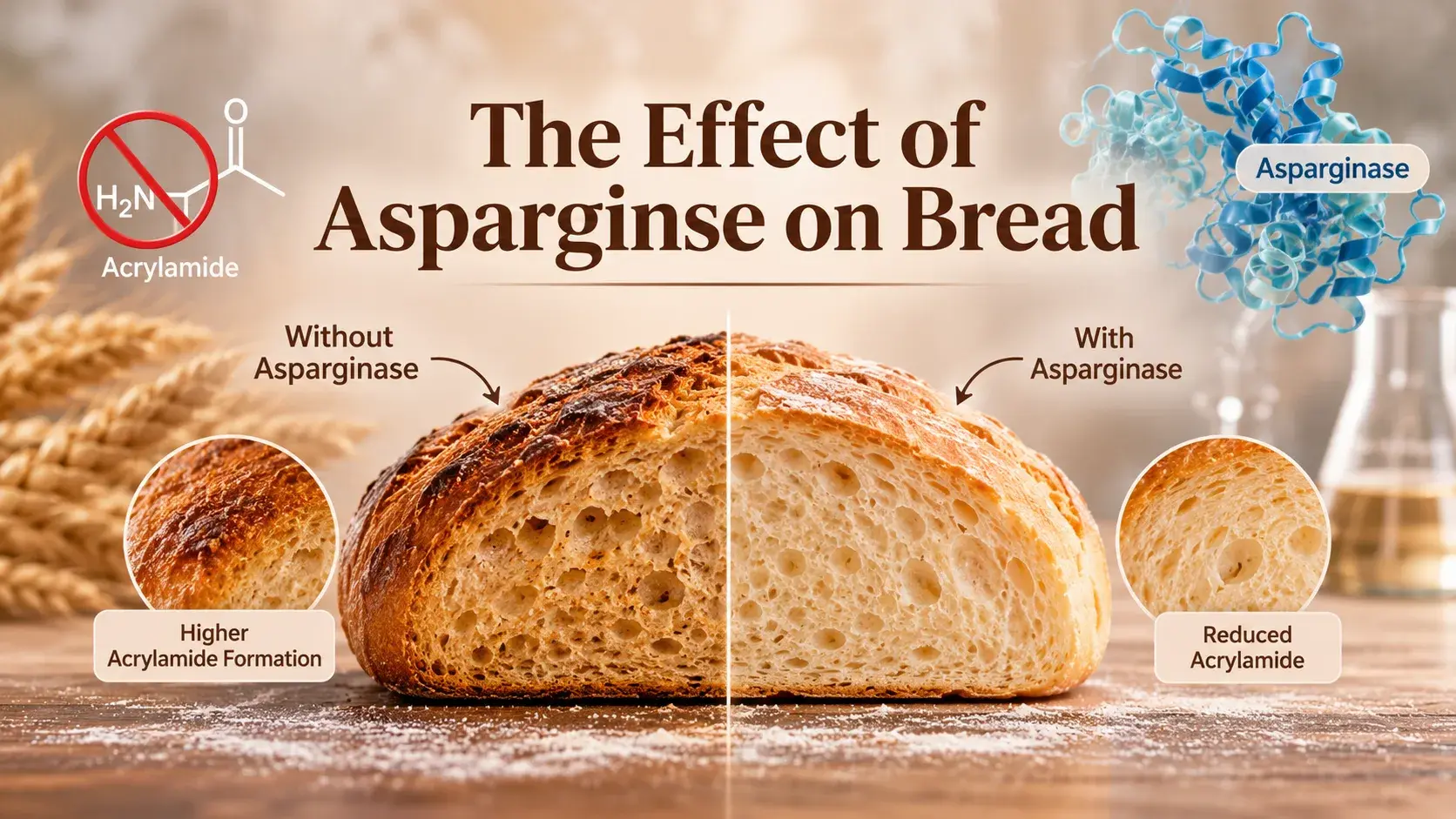
Effect of Asparaginase on Bread
The discovery of acrylamide in thermally processed, carbohydrate-rich foods transformed industrial cereal chemistry.
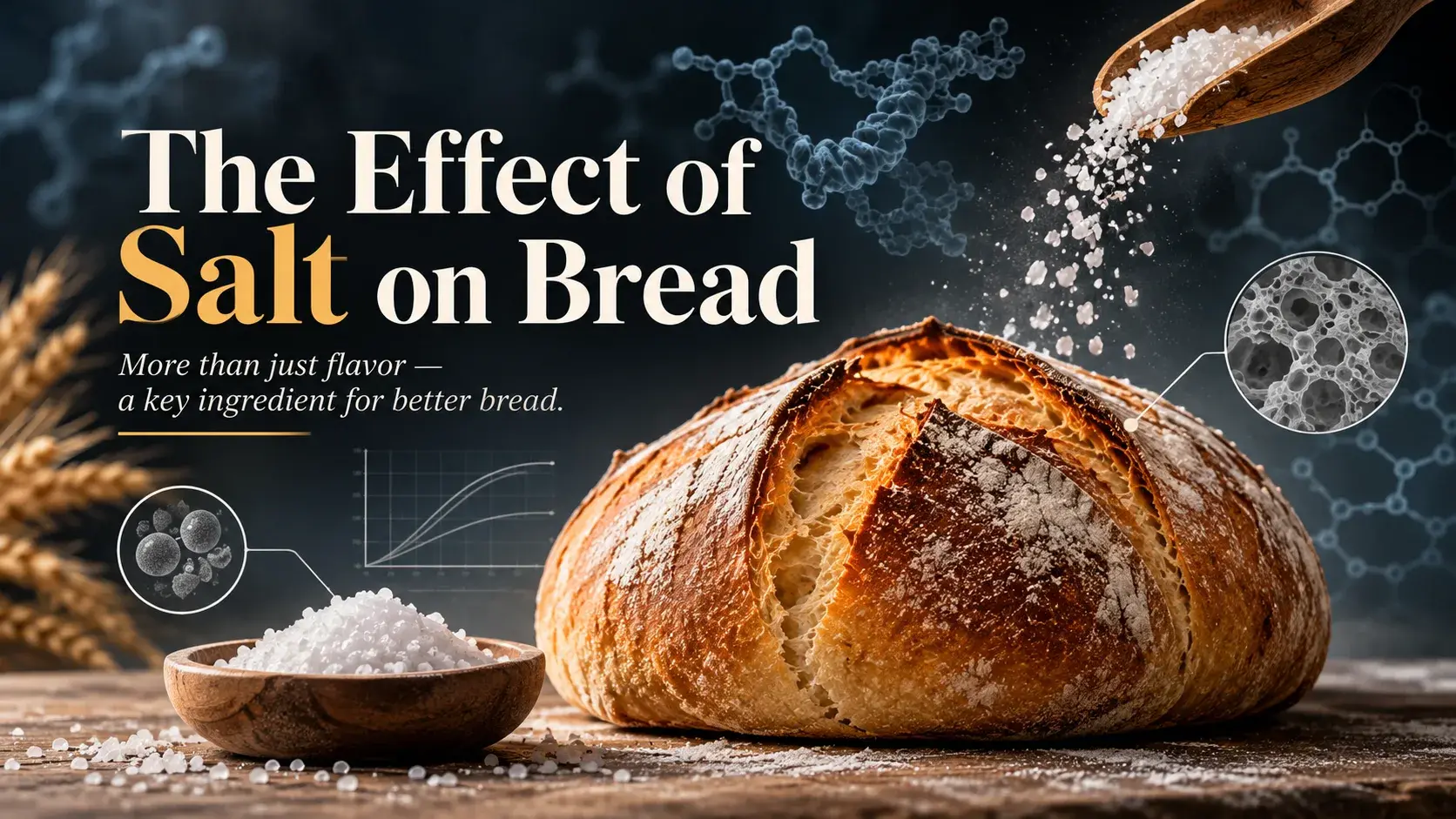
The Effect of Salt on Bread
Bread making appears deceptively simple on the surface, relying on just four fundamental ingredients: flour, water, yeast, and salt.
Perfect Crust, Zero Flaking: Thermo-Mechanical Causes and Remediation of Crust Flaking in Bread
# In the modern baking industry, par-baked frozen bread technology is one of the most critical industrial innovations.