The Effect of Salt on Bread
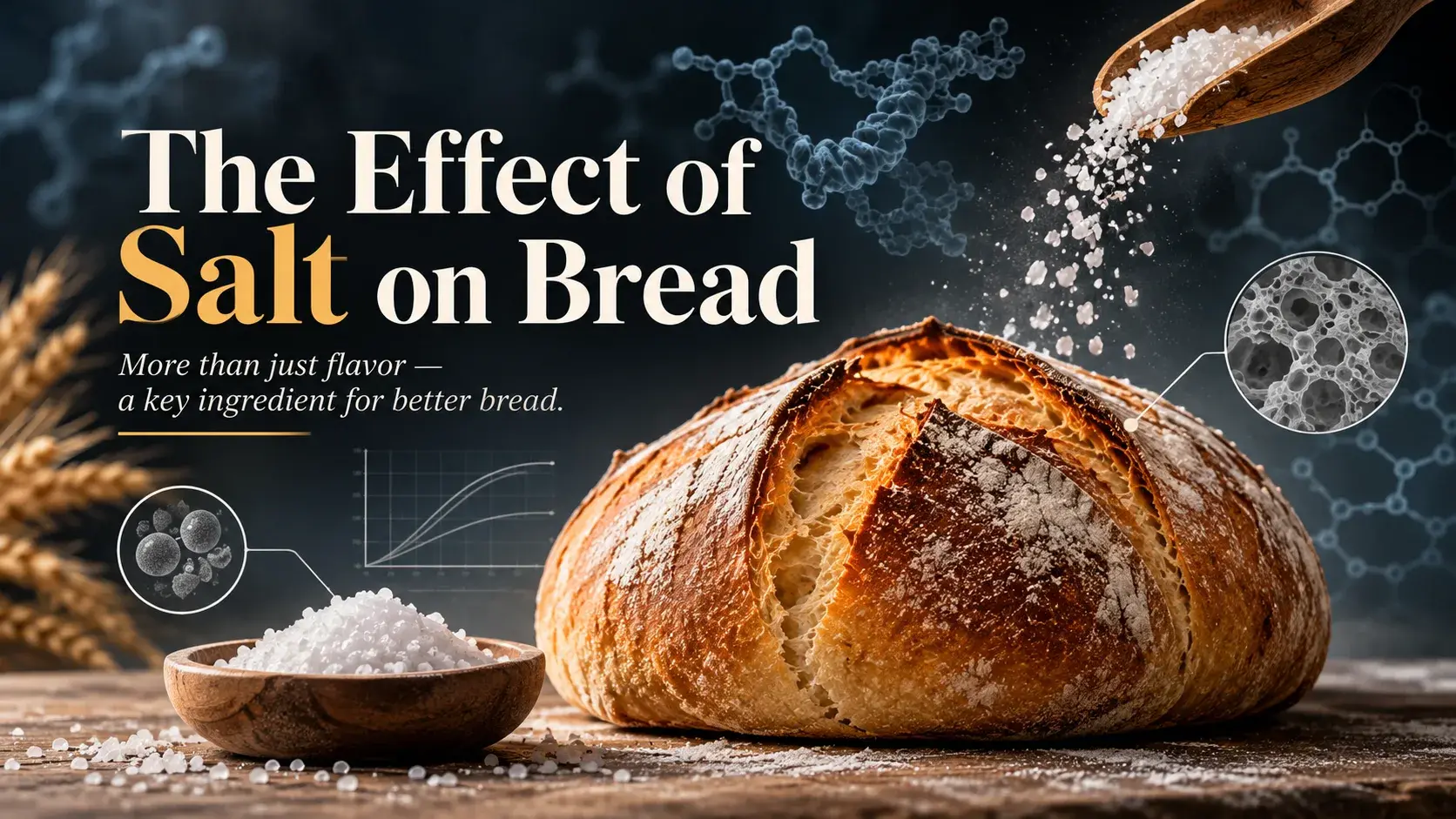
The Magic of a Pinch of Salt: How Salt Shapes Texture, Flavor, and Structure in Bread Baking
Bread making appears deceptively simple on the surface, relying on just four fundamental ingredients: flour, water, yeast, and salt. Yet among these core components, salt is frequently misunderstood as a mere flavoring agent a seasoning added solely to prevent bread from tasting bland. In baking science and dough technology, salt serves a far more profound function. It acts as the invisible structural engineer of the dough, the regulatory mechanism for yeast metabolism, and the primary catalyst for crumb elasticity and crust coloration. Incorporating a small quantity of salt typically 1.8% to 2.2% based on flour weight triggers a biochemical transformation that affects everything from protein cross-linking to oven browning.
Understanding the underlying chemistry of salt reveals why even minor variations in salt percentage alter dough rheology and finished loaf quality. Without salt, bread dough becomes unmanageable, ferments uncontrollably, and yields a pale, crumbly loaf.
1. Beyond Taste: Why Saltless Bread Feels Bland and Flat
The most immediate sensory function of salt is flavor enhancement. However, salt does not simply impart a "salty" taste to bread; it enhances the natural aromatic compounds of wheat flour and highlights the complex organic acids produced during yeast and sourdough fermentation.
In the Tuscan region of Italy, traditional bread (Pane Toscano) has historically been baked without salt. First-time tasters of authentic Tuscan bread often remark that despite its pleasant crust and light crumb structure, the flavor profile feels noticeably flat, dull, and incomplete. Sensory evaluations demonstrate that sodium chloride stimulates taste receptors on the human tongue, lowering the perception threshold for sweet cereal notes while masking inherent bitterness. In salt-free doughs, the rich, buttery flavor of fermented endosperm remains muted, leaving behind an uninspired sensory profile.
2. The Hidden Architectural Scaffold: How Salt Tightens the Gluten Network
When wheat flour is hydrated with water, the storage proteins gliadin and glutenin absorb water and align under mechanical shear to form a continuous, viscoelastic gluten matrix. This matrix acts as a three-dimensional elastomeric network, trapping carbon dioxide () gas bubbles produced by fermenting yeast. Salt plays a crucial role in strengthening and tightening this protein architecture.
- The Ionic Shielding Mechanism: When hydrated, gliadin and glutenin chains accumulate net positive electrical charges along their peptide backbones. Like identical poles of magnets, these positively charged protein strands repel one another. This repelling force forces protein chains apart, causing un-salted dough to feel slack, sticky, and weak.
- Neutralization of Repulsive Charges: When salt () dissolves in dough water, it dissociates into positive sodium () and negative chloride () ions. These free ions form an ionic shield around the charged amino acid side chains on the gluten proteins, neutralizing their mutual repulsion.
- Enhanced Cohesion and Gas Retention: With repulsive forces suppressed, hydrophobic amino acid residues and cysteine sulfhydryl groups on adjacent protein chains draw closer together. This proximity facilitates stronger inter-chain hydrogen bonding and hydrophobic interactions, transforming a sticky, fluid mass into a smooth, extensible, and elastic dough capable of expanding without tearing.
If a baker forgets to add salt during mixing, the dough remains wet, overly slack, and prone to tearing, failing to hold shape during shaping and proofing.
3. Reining In the Yeast: Fermentation Rate, Osmotic Pressure, and Plasmolysis Risk
Baker's yeast (Saccharomyces cerevisiae) ferments simple sugars present in dough water to generate carbon dioxide () gas and ethanol. Uncontrolled yeast activity, however, causes rapid, erratic gas production that over-stretches and eventually collapses the gluten scaffold before the loaf reaches the oven.
- Osmotic Pressure and Metabolic Regulation: Salt is strongly hygroscopic, meaning it attracts and binds free water molecules in the dough matrix. As the concentration of dissolved and ions in the aqueous phase increases, it exerts osmotic pressure on yeast cell membranes. Water is drawn out of the yeast cytoplasm via osmosis, temporarily dehydrating the cells and slowing their metabolic rate.
- Accumulation of Flavor Precursors: By regulating fermentation speed, salt grants the dough sufficient time to mature. Slower, more controlled fermentation allows yeast and lactic acid bacteria (LAB) to synthesize organic acids, esters, and aldehyde compounds, enriching the overall flavor profile of the bread.
- Preventing Plasmolysis (Osmotic Shock): Direct contact between undiluted salt and active yeast can be catastrophic. When dry yeast and salt are placed in direct physical contact in a mixing bowl, the extreme localized salt concentration causes severe osmotic shock (plasmolysis), destroying yeast cell membranes and killing the microorganisms. Salt should always be pre-mixed into the flour or dissolved evenly in the formula water prior to adding active yeast.
4. Suppressing Proteolytic Breakdown: Preventing Dough Liquefaction
Wheat flour contains endogenous protease enzymes (proteolytic enzymes) that break down peptide bonds in gluten proteins. While mild proteolytic activity is beneficial for relaxing tight doughs, excessive enzymatic breakdown weakens the gluten network, causing the dough to liquefy and lose structural integrity over extended fermentation times or in warm environment conditions.
Salt acts as a natural competitive inhibitor of flour proteases. The presence of chloride ions reduces the catalytic activity of proteolytic enzymes, protecting the gluten scaffold against excessive breakdown. In long-fermentation processes—such as overnight sourdoughs, poolish pre-ferments, or sponge-and-dough systems—salt ensures that the gluten structure remains firm, resilient, and capable of supporting maximum oven spring.
5. Oven Browning and Crust Crispness: Maillard Reactions and Water Activity
The appetizing golden-brown crust color and crisp texture achieved during baking depend heavily on the presence of salt.
| Functional Property | Salted Dough | Unsalted Dough |
|---|---|---|
| Sugar Consumption | Controlled yeast activity leaves residual reducing sugars (maltose, glucose). | Rapid yeast fermentation consumes virtually all available sugars. |
| Crust Coloration | Rich golden-brown hue via Maillard browning & caramelization (). | Pale, dull, and chalky crust due to sugar depletion. |
| Crust Texture & Moisture | Regulates surface water activity (), preserving crispness. | Rapidly absorbs atmospheric moisture, becoming leathery. |
Because salt regulates yeast consumption, adequate quantities of reducing sugars remain available in the dough as it enters the oven. When surface temperatures exceed (), these residual sugars react with amino acids via non-enzymatic Maillard reactions and pyrolytic caramelization, generating brown melanoidin pigments and roasted aroma volatiles. Additionally, salt reduces water activity () in the crust, helping maintain crust crispness during cooling.
6. Baker's Timing: Standard vs. Delayed Salt Addition Techniques
In commercial and artisan baking, the timing of salt incorporation is a critical variable:
- Standard Addition (Start of Mixing): Salt is blended with the flour at the beginning of mixing. This protects dough against premature over-oxidation and establishes gluten tightness from the initial mixing stage.
- Delayed Salt Method (Autolyse Integration): In artisan baking, flour and water are frequently mixed without salt and rested for 20 to 60 minutes (the autolyse phase). In the absence of salt, water hydrates starch granules and proteins unimpeded, allowing rapid initial gluten formation. Salt is added toward the end of mixing to firm up the matrix, maximizing dough extensibility while building elastic strength.
Bakers must note, however, that excessively long mixing without salt can lead to over-oxidation of flour pigments, destroying natural carotenoids and turning the bread crumb unnaturally white instead of a creamy yellow.
Sources
- Advanced Bread and Pastry: A Professional Approach (Michel Suas)
- Cereal Grains: Properties, Processing, and Nutritional Attributes (Sergio O. Serna-Saldivar)
- Modernist Bread (Volume 3: Techniques and Equipment) (Nathan Myhrvold & Francisco J. Migoya)
- Handbook of Breadmaking Technology (Charles A. Stear)
Keep reading
All postsEffect of Steam on Bread
Baking is fundamentally a thermodynamic phase-change process in which a viscoelastic dough foam is converted into a stable, porous crumb structure…
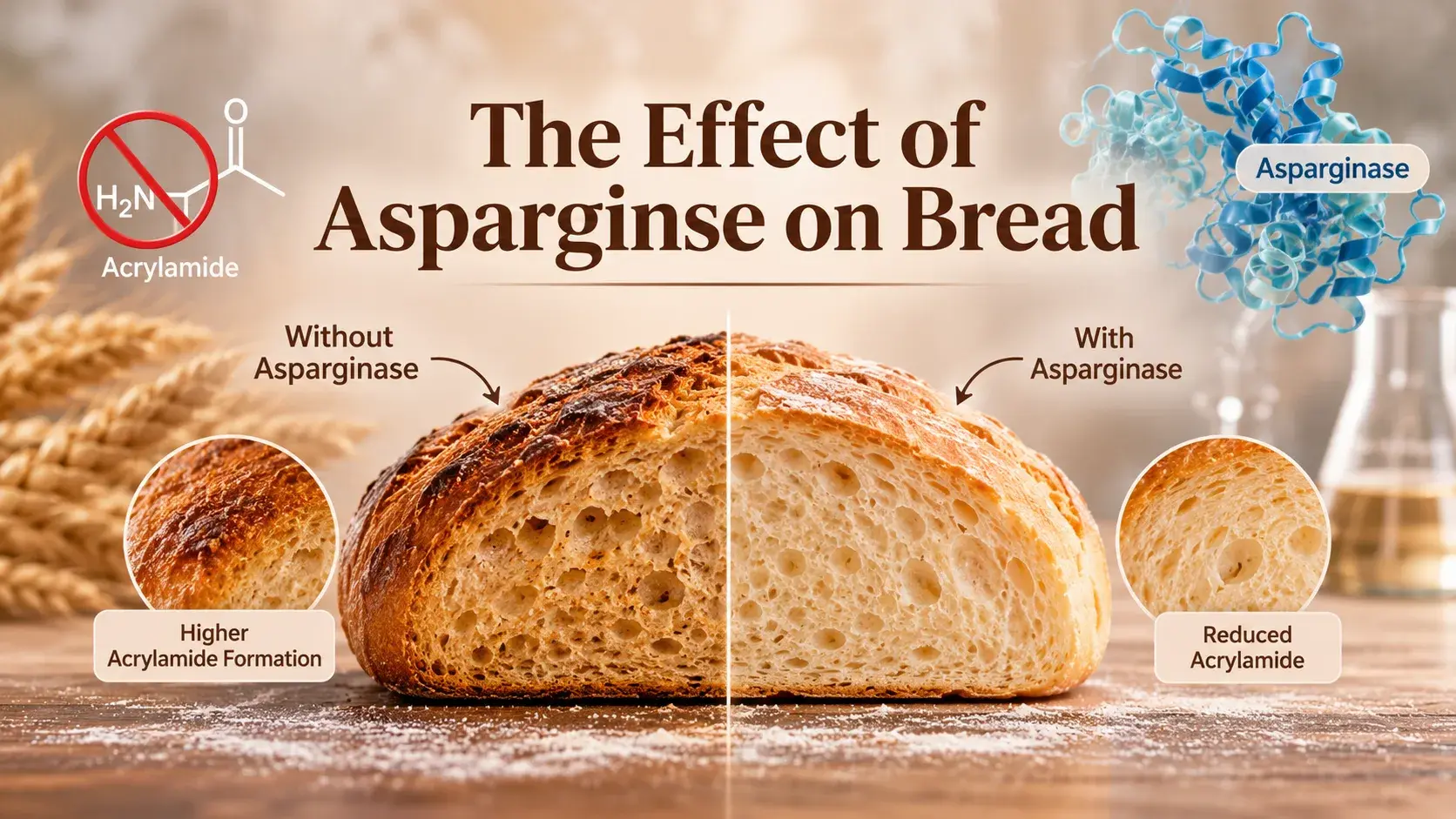
Effect of Asparaginase on Bread
The discovery of acrylamide in thermally processed, carbohydrate-rich foods transformed industrial cereal chemistry.
Perfect Crust, Zero Flaking: Thermo-Mechanical Causes and Remediation of Crust Flaking in Bread
# In the modern baking industry, par-baked frozen bread technology is one of the most critical industrial innovations.