Perfect Crust, Zero Flaking: Thermo-Mechanical Causes and Remediation of Crust Flaking in Bread
1. Introduction: Par-Baked Bread Technology and the Crust Flaking Issue
In the modern baking industry, par-baked frozen bread technology is one of the most critical industrial innovations. It enhances logistical flexibility between central production facilities and retail points of sale while providing consumers with fresh bread on demand. Forming the foundation of the "hot point" concept, this technology relies on dividing the baking process into two distinct stages. In the first baking stage, the internal structure of the dough is fixed; starch gelatinization and protein denaturation are completed to establish the final volume and viscoelastic architecture of the bread. This process is intentionally interrupted when the core temperature of the bread reaches the range of to , before browning (Maillard reactions) and crisping occur on the outer crust—meaning while the bread remains pale or white. The par-baked items are rapidly conditioned and moved to a shock freezer, where they are stored until the terminal (final) baking stage, carried out at retail outlets or at home.
However, this two-stage thermal processing method introduces a quality defect that is exceptionally difficult for industrial bakers and food engineers to manage: Crust Flaking (also known as shelling, peeling, or crust delamination). This phenomenon is defined as the physical separation of the outer crust from the underlying crumb, peeling off in thin flakes either during final baking or throughout the subsequent cooling process.
Commercial and Sensory Drawbacks of Crust Flaking
Crust flaking directly degrades the aesthetic and sensory quality of the final product, negatively impacting consumer acceptance. During slicing, packaging, and display at retail points, this structural separation generates large quantities of crumbs and flakes, leading to substantial commercial product losses, reduced shelf life, and costly food waste for businesses.
2. Physical and Thermo-Mechanical Dynamics of Crust Flaking
The physical and microstructural transformations that par-baked bread undergoes during cooling, freezing, and storage following the initial bake have been investigated in detail using advanced analytical techniques such as Magnetic Resonance Imaging (MRI), Scanning Electron Microscopy (SEM), and Differential Scanning Calorimetry (DSC). The findings reveal that crust delamination is driven by complex thermodynamics, moisture transport, and rheological mechanisms.
2.1. Gas Phase Contraction and Tensile Stress
In accordance with the Ideal Gas Law, carbon dioxide and water vapor trapped within the bread pores shrink rapidly as the temperature drops from the oven environment to ambient and cold-storage levels. Quantitative signal measurements using MRI have proven that the gas volume within the pores contracts by during cooling.
If the internal bread matrix (crumb) lacks sufficient elasticity to accommodate this volumetric shrinkage, mechanical stress accumulates within the structure. When the crumb cannot respond flexibly to gas contraction, high tensile stress develops at the interface immediately beneath the upper crust. MRI signal intensity maps recorded during cooling show a sudden spike in signal density in localized zones right under the top crust. Contrary to popular belief, this increase is not due to water accumulation, but rather to localized collapse and densification caused by the crumb contracting and pulling away from beneath the rigid crust. When the matrix fails to dampen this mechanical stress, microscopic cracks form at the interface.
2.2. Thermo-Mechanical Shock and Freezing Gradients
The core temperature of par-baked bread as it enters the shock freezer is a critical parameter for process stability. If the product enters the freezer at a core temperature of instead of , the risk of crust flaking increases exponentially. The severe temperature and enthalpy gradients between the hot, vapor-rich core and the ultra-cold shock freezer environment generate thermo-mechanical shock. Driven by the vapor pressure gradient, moisture migrating toward the sub-crust layer condenses rapidly and forms large ice crystal deposits along the freezing front. This coarse crystalline structure and micro-damage pave the way for complete detachment of the crust from the matrix during second baking.
2.3. Moisture Migration, Glass Transition (), and Starch Retrogradation
Following the first bake, the crumb maintains a high moisture content (40–45%), whereas the outer crust exhibits extremely low moisture due to rapid surface evaporation. The fast loss of water from the crust during baking results in incomplete (partial) gelatinization of starch granules in this zone compared to the core. This lower degree of starch gelatinization renders the moisture adsorption isotherm and glass transition dynamics of the crust completely distinct from those of the crumb.
To model the drying kinetics and moisture loss from the crust during cooling, the Page Moisture Loss Model is applied:
Where represents the average moisture content at time , is the initial moisture content, and is the equilibrium moisture content.
During storage, moisture continuously migrates from the high-concentration core toward the low-moisture crust. Because water acts as a powerful plasticizer, the glass transition temperature () of the hydrated crust components drops. Consequently, the crust transitions from an ideally crispy glassy state to a flexible, leathery rubbery state. During final baking, this plasticized moisture under the crust evaporates suddenly, producing a steep internal pressure gradient; the weakened interface cannot withstand this pressure and fractures.
In addition, amylopectin retrogradation kinetics take effect during frozen storage. The enthalpy of ice melting (), determined by DSC analysis, is highly sensitive to sub-zero storage temperatures. In par-baked bread stored at higher sub-zero temperatures (e.g., ), amylopectin crystallization and starch retrogradation proceed significantly faster than in bread stored at . The hardening of the starch structure and the resulting loss of matrix flexibility exacerbate interfacial stresses, triggering flaking.
| Parameter / Feature | Par-Baked Crumb | Par-Baked Crust |
|---|---|---|
| Moisture Content | High (40% – 45%) | Low to Medium (Variable during storage) |
| Starch Gelatinization | Fully Gelatinized (Viscoelastic matrix) | Partially Gelatinized (Due to rapid surface evaporation) |
| Mechanical State | Rubbery / Flexible | Glassy / Crispy (Leathery via moisture plasticization) |
| Response to Cooling | Volumetric Shrinkage (Gas contraction) | Rigid Resistance & Tensile Stress against contraction |
| MRI Signal Profile | Time-dependent decrease | Localized signal peak at interface (Collapse/Densification) |
3. Influence of Dough Formulation and Process Deviations
Crust flaking is not solely dictated by freezing and cooling parameters; flour rheology, enzymatic balance, dough handling, and proofing errors also rank among its primary root causes.
3.1. Flour Quality and Gluten Network Deficiencies
Flour intended for frozen par-baked product technology must possess exceptionally high protein quality and gas retention capability. Typically, hard wheat flours with 12–14% protein content and a high gluten index (such as derivatives of Minnesota Hard Winter Wheat) serve as the industrial standard. Rheologically, Extensograph and Alveograph analyses should target the following baseline values:
- Deformation Energy (): Minimum
- Tenacity / Extensibility Ratio (): Balanced profile in the range of
During mixing, the dough must pass the windowpane test to ensure sufficient matrix elasticity. A weak gluten network or ruptured alveoli walls caused by over-mixing reduces gas retention capability. During baking, this creates a flying crust (or tunnel crust), where the crust separates from the crumb like a hollow dome.
3.2. Enzymatic Activity, Proteolysis, and Sourdough Optimization
Excessive -amylase activity excessively degrades and dextrinizes starch polymers beneath the crust during early baking stages, causing liquefaction. As starch loses its structural matrix-forming capacity, voids form under the crust, leading to structural separation known as a flying roof (hollow space).
Similarly, proteolysis threatens process stability. Flour derived from germinated wheat exhibits significantly elevated protease activity. Proteases hydrolyze the peptide bonds in the gluten matrix, rendering it brittle. A degraded gluten network cannot absorb freezing and gas-contraction stresses, making crust adhesion impossible.
At this stage, biological acidity control via sourdough and lactic acid bacteria (LAB) offers a comprehensive solution. Lactic and acetic acids generated during sourdough fermentation lower the dough pH (reducing bulk dough pH to and final product pH to ):
- Enzyme Inhibition: A low-pH environment specifically inhibits excessive -amylase and endogenous protease activity, preventing starch liquefaction and gluten degradation.
- Acrylamide and Flavor Synthesis: Low pH suppresses acrylamide formation along the Maillard reaction pathway while fostering precursor compounds that generate rich, nutty, and malty flavors during baking.
3.3. Proofing and Scoring Errors
- Proofing Humidity and Skinning: Insufficient relative humidity in the proofing chamber leads to surface moisture loss, causing the dough to form a dry outer layer (skinning). This non-elastic layer traps internal gases underneath, generating localized stress centers and small voids under the crust. Conversely, excessively high proofing humidity causes dough flow and loss of structural strength.
- Strategic Scoring: Scoring provides a controlled path for the discharge of steam and gas during oven spring. Inadequate, shallow, or improper scoring leaves expanding internal steam without a release route; pressure accumulates beneath the crust, shearing it away from the crumb.
4. Holistic Strategies to Prevent Crust Flaking
To completely eliminate crust flaking in industrial par-baked frozen bread manufacturing, integrated measures must be implemented across formulation, processing, and terminal baking:
- Conditioning and Cooling Control: Maintain high relative humidity (90–95% RH) in post-bake cooling tunnels and resting rooms to prevent surface drying. Gradually reduce the bread core temperature to approximately before entering the shock freezer; avoid sending hot products directly into the freezer to eliminate thermo-mechanical shock and sub-crust ice crystal accumulation.
- Optimized Proofing Conditions: Precisely control proofing chamber humidity (75–85% RH) to prevent skinning. Implement a "dry proofing" phase of at least 5 minutes just prior to oven entry to set the dough surface and form a controlled crust matrix.
- Strategic Scoring: Apply clean, diagonal cuts along the length of the loaf to allow smooth steam release as the bread expands. This prevents pressure build-up under the crust.
- Formulation & Ingredient Technology:
- Proteins & Oxidants: Select hard wheat flours (12–14% protein) and supplement with ascorbic acid to promote disulfide () cross-linking, boosting matrix elasticity.
- Emulsifiers: Incorporate Sodium Stearoyl Lactylate (SSL) or Diacetyl Tartaric Acid Esters of Mono- and Diglycerides (DATEM) to fortify gas cell walls against freezing and expansion stresses.
- Hydrocolloids: Add hydrocolloids with high water-binding capacity (such as xanthan gum or guar gum) to reduce un-bound water, restricting moisture migration and starch retrogradation.
- Biotechnological Enzyme Complexes: Use tailored xylanases (hemicellulases) and lipases to improve dough viscoelasticity and strengthen polar lipid-protein interactions.
- Steam Injection During Final Baking: Apply heavy steam injection during the first few minutes of the terminal bake. Condensing steam delays early crust setting and preserves surface elasticity, allowing the crust to expand smoothly with the inner matrix without tearing or delaminating.
5. Quality Control and Conclusion
To quantitatively evaluate crust flaking tendency and mechanical strength in industrial settings, standardized Crust Flaking Tests are conducted. In this testing protocol, fully terminal-baked and conditioned loaves undergo a 30% compression test (deforming height and diameter by 30%). Flakes that detach from the crust surface are collected and weighed on a precision balance.
The surface area of the peeled fragments is measured down to the pixel level using image analysis software such as Image Tool 3.0. The resulting flaking index directly validates the efficacy of any process or formulation adjustments.
In summary, achieving a smooth, flawless, and flake-free crust in par-baked frozen bread technology cannot be accomplished by tweaking a single parameter. Industrial producers must employ an integrated approach: strong formulations utilizing high-protein flour, sourdough-driven pH control, precise humidity management during proofing and cooling, proper thermal equilibration before shock freezing, and optimized steam delivery during terminal baking. Minimizing thermo-mechanical stresses through these coordinated steps prevents industrial waste and ensures consumers enjoy fresh, crispy, high-quality bread every time.
Sources
- Almeida, E. L., Steel, C. J., & Chang, Y. K. (2016). Par-baked bread technology: Formulation and process studies to improve quality. Critical Reviews in Food Science and Nutrition, 56(1), 70–81. [suspicious link removed]
- Bárcenas, M. E., & Rosell, C. M. (2006). Effect of frozen storage time on the bread crumb and aging of par-baked bread. Food Chemistry, 95(3), 438–445.
- Chen, Y., & Gavaliatsis, T. (2021). Crust treatments to reduce bread staling. Current Research in Food Science, 4, 182–190.
- Dapčević-Hadnađev, T., & Tomić, J. (2022). Processing strategies to improve the breadmaking potential of whole-grain wheat and non-wheat flours.
- Jusoh, Y. M. M., Chin, N. L., Yusof, Y. A., & Rahman, R. A. (2013). Impact of humidified baking on crust and crumb properties of open bread during storage. Food Science and Technology Research, 19(1), 29–37
- Rouillé, J., Le-Bail, A., & Courcoux, P. (2000). Influence of formulation and mixing conditions on breadmaking qualities of French frozen dough. Journal of Food Engineering, 43(4), 197–203
Keep reading
All postsEffect of Steam on Bread
Baking is fundamentally a thermodynamic phase-change process in which a viscoelastic dough foam is converted into a stable, porous crumb structure…
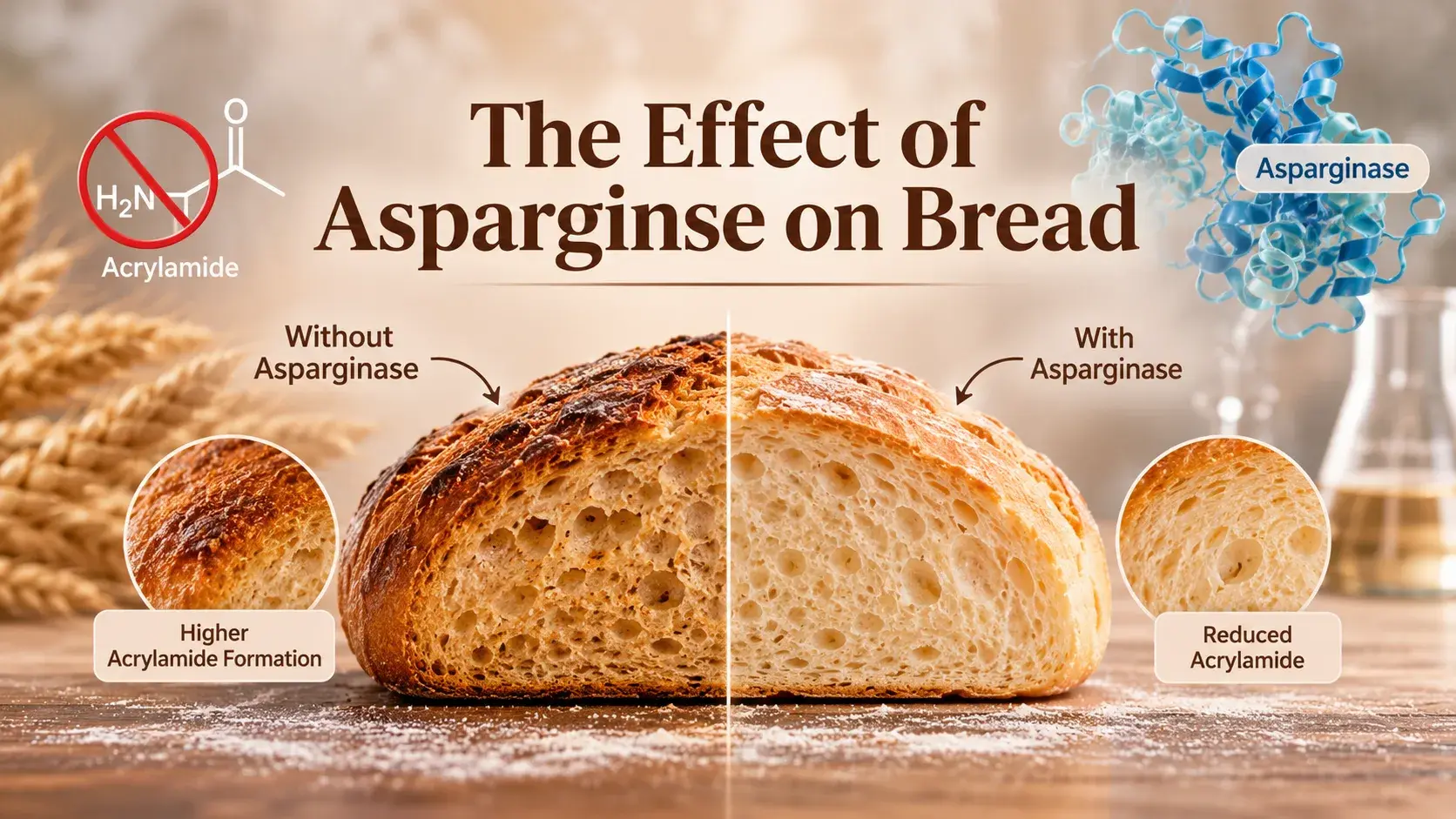
Effect of Asparaginase on Bread
The discovery of acrylamide in thermally processed, carbohydrate-rich foods transformed industrial cereal chemistry.
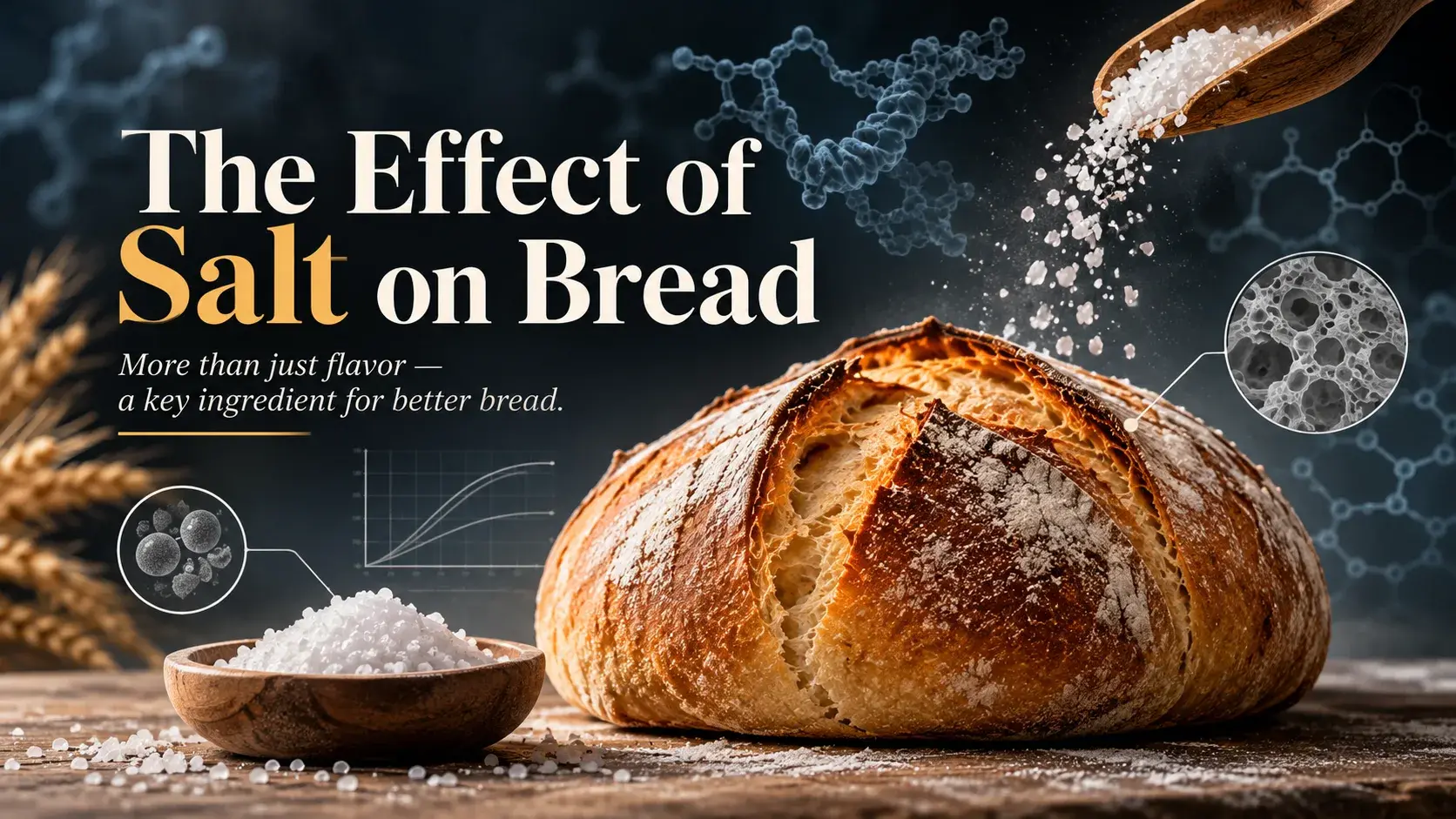
The Effect of Salt on Bread
Bread making appears deceptively simple on the surface, relying on just four fundamental ingredients: flour, water, yeast, and salt.