History of Bread
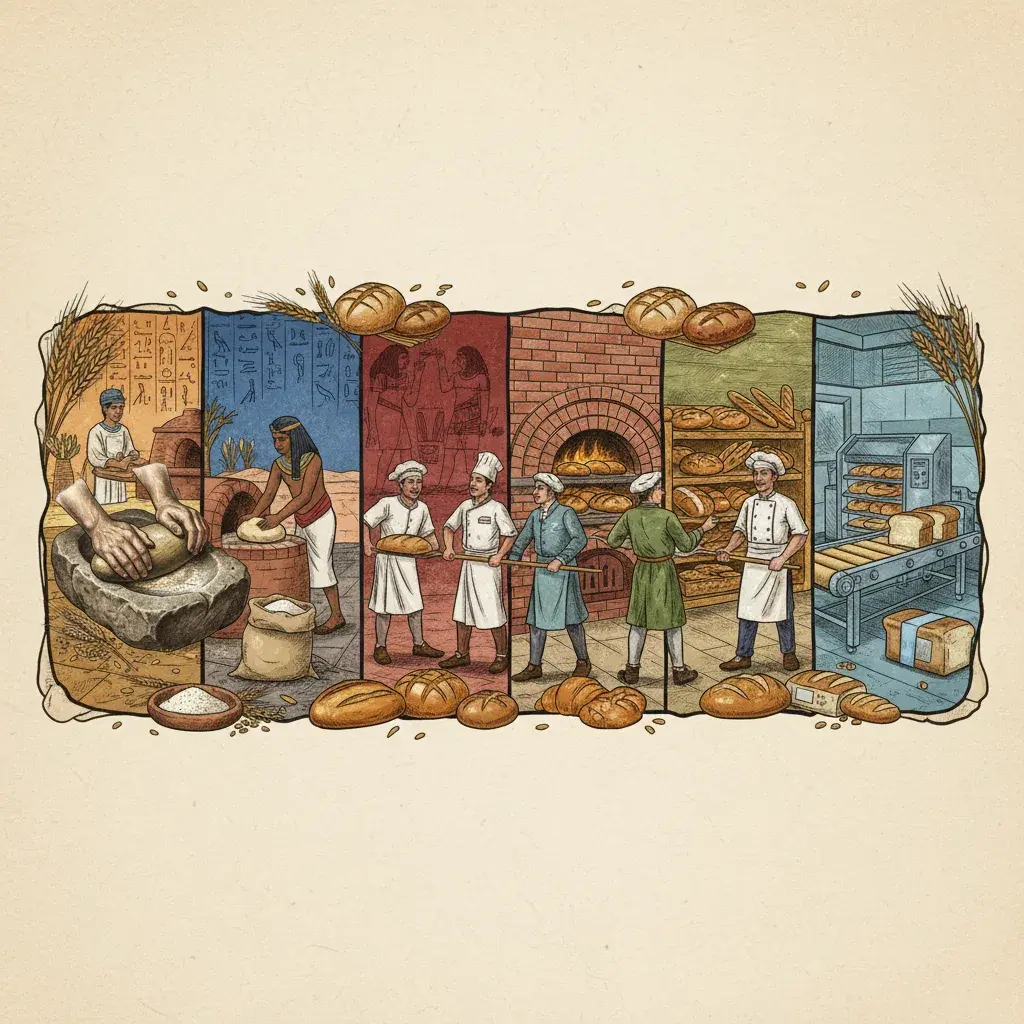
The Scent of Civilization: The History of Bread and Human Evolution
If civilization had a taste, it would undoubtedly be the taste of bread. Bread is one of the most fundamental, defining, and deeply rooted foods in human history. It is not merely a means of sustenance, but a powerful key to understanding how societies have been shaped, organized, and sustained over millennia. When humans transitioned from a nomadic way of life to settled communities, learned agriculture, and mastered the arts of production and sharing, bread emerged as the crowning achievement of those shifts. For this reason, the story of bread is, at its core, the story of human civilization itself.
In ancient times, bread production formed the bedrock of urbanization and community structure. During the Middle Ages, it became a rigid marker of social class, distinguishing the wealthy from the poor. With the advent of the Industrial Revolution, bread evolved into a symbol of mass production and standardization, reflecting humanity’s growing control over technology, trade networks, and natural resources.
Fire, Stone, and the First Grains
Prehistoric times mark the pivotal era when bread first emerged, representing a major turning point in human history as people transitioned from hunting and gathering to systematic food production. With the processing, crushing, and baking of wild grains, both dietary habits and foundational ways of life began to change forever. These early baking practices laid the groundwork for all subsequent civilizations.
Archaeological discoveries reveal that bread was being made long before the formal dawn of agriculture and even prior to permanent human settlement. The oldest known evidence of bread was discovered in Jordan, where archaeologists unearthed the remains of flat, unleavened, bread-like foods made approximately 14,500 to 11,500 years ago by hunter-gatherer communities. These early baked goods were crafted from wild wheat, wild barley, and various tubers.
As agriculture took root, particularly with the domestication of wheat in the Fertile Crescent, bread shifted from a rare, seasonal novelty into a daily dietary staple. Archaeological findings dating back roughly 9,100 years have been uncovered in Neolithic settlements across modern-day Turkey and Europe, demonstrating how deeply intertwined farming and bread-making became during the shift toward sedentary village life.
Prehistoric grain processing techniques were simple yet remarkably effective. Initially, people used basic stone crushers to mash grains into a porridge-like mixture. Over time, grinding stones were developed, allowing one stone to be moved back and forth over another to produce finer flour. Later, hand mills working with a circular motion emerged, making grain processing a regular household task. Bread remains found in Swiss lake settlements further reveal that coarsely ground grains were shaped into round loaves, baked on hot stones, and covered with hot ash during cooking.
Bread in Ancient Civilizations
About 5,000 to 6,000 years ago, baking in Ancient Egypt had advanced significantly. Egyptians cultivated diverse wheat varieties, such as Triticum and spelt, alongside barley. Their most crucial discovery was fermentation: keeping a small piece of fermenting dough from the previous day to inoculate the next batch — the direct historical ancestor of modern sourdough. Baking evolved into a specialized profession requiring considerable skill. Bread and beer were so central to the economy that Egyptian workers were frequently compensated with them instead of currency.
In ancient Greece and Rome, bread culture deeply mirrored societal structures. Ordinary Greeks consumed a simple, unleavened barley staple called maza, while fine wheat bread was reserved for special religious festivals. By the 5th century BC, commercial bread shops had appeared in Athens, and the concept of separate, pre-heated ovens likely originated there. In Rome, baking became a recognized profession by the 2nd century BC following the arrival of Greek bakers. The round loaves discovered in Pompeii illustrate the classic Roman baking style, featuring deep surface scoring so loaves could be easily broken by hand without knives. Reliefs on the tomb of the wealthy Roman baker Eurysaces meticulously depict the entire industrial process of the era, from grain procurement and sieving to kneading and baking. Following the fall of the Roman Empire, this centralized system dissolved, giving way to local, feudal European structures where bread became an explicit symbol of social hierarchy.
In Mesopotamia, Assyrian reliefs on the Balawat Gates depict bakers in military camps preparing flat and round breads. In Hebrew culture, bread held deep sacred and daily significance, famously embodied in the holy “Shewbread” offered weekly in temples.
Medieval Europe: Hierarchy and Trenchers
In Medieval Europe, bread was the absolute centerpiece of daily existence, heavily regulated by strict economic rules and social customs. For the nobility, white bread was a status symbol and part of elite table service; for the peasantry, coarse dark bread was a daily struggle for sheer survival.
A fascinating cultural artifact of this period was the trencher a thick, stale slice of bread measuring roughly 15×10 cm used as an edible plate to absorb juices and sauces from roasted meats. Depending on social circumstances and charity, these sauce-soaked trenchers were either eaten at the end of the meal by diners, given away to the poor, or fed to hunting dogs. This tradition slowly faded out during the 15th century as wooden and pewter plates became commonplace.
Bread Adulteration and Public Health
From the late 18th through the 19th century, bread adulteration became a rampant public health crisis in industrializing nations like England and the United States. To cut costs and artificially inflate profit margins, unscrupulous bakers added hazardous substances such as chalk, plaster, alum, and pulverized wood to flour.
In 1820, chemist Frederick Accum exposed these dangerous practices, sounding a public alarm. Shortly after, American health reformer Sylvester Graham advocated for wholesome, unrefined whole-grain bread baked at home, giving rise to “Graham bread.” These mounting public health concerns and scientific exposures forced governments to intervene, leading to landmark legislations like England’s Food Adulteration Acts of 1860 and 1899 to protect consumers.
The Industrial Revolution and Standardization
The 20th century completely revolutionized millennia-old artisan baking traditions through mechanization. Inventions such as Otto Frederick Rohwedder’s 1928 bread-slicing and wrapping machine transformed baking logistics. However, the true structural shift occurred in 1961 with the introduction of the Chorleywood Bread Process in the United Kingdom, which utilized high-speed mechanical mixing to drastically shorten fermentation times. While this maximized industrial efficiency, it stripped everyday bread of local character, turning it into a uniform, standardized commodity.
Simultaneously, modern milling techniques extended the shelf life of white flour by stripping away the nutrient-dense bran and germ, causing widespread deficiencies in fiber, iron, and B vitamins. This prompted wartime nutritional interventions, such as the U.S. government’s 1941 fortification mandates.
Interestingly, while white bread was historically coveted by elites because fine milling required extra labor and grain loss, the late 20th century completely inverted this status symbol. With rising health consciousness, dark, whole-grain breads reclaimed high status, while industrial white bread became associated with lower nutritional quality.
Global Bread Traditions
Across the globe, geography and climate dictated unique bread lineages. In the Americas, maize was the native staple grain, giving rise to iconic traditions like Mayan tortillas and tamales that remain central to modern Mexican cuisine.
In Asia, climate zones split grain usage: northern China favored wheat, leading to steamed breads rather than western-style baked loaves, while southern regions relied on rice. In India, unleavened wheat flatbreads like chapati remained an everyday staple.
In Europe, harsh northern climates favored rye. Scandinavia developed dense rye loaves like Norway’s Husholdningsbrød and crisp flatbreads (Fladbrød). Germany became world-famous for its dark, long-lasting rye loaf, Pumpernickel. In Austria, Vienna cemented its reputation as a baking capital, giving birth to creations like the Kaiser Semmel, whose iconic star-shaped scoring legendary commemorates a historic military victory.
From ancient hearths to modern factories, bread remains the enduring mirror of human ingenuity, culture, and survival.
Keep reading
All postsEffect of Steam on Bread
Baking is fundamentally a thermodynamic phase-change process in which a viscoelastic dough foam is converted into a stable, porous crumb structure…
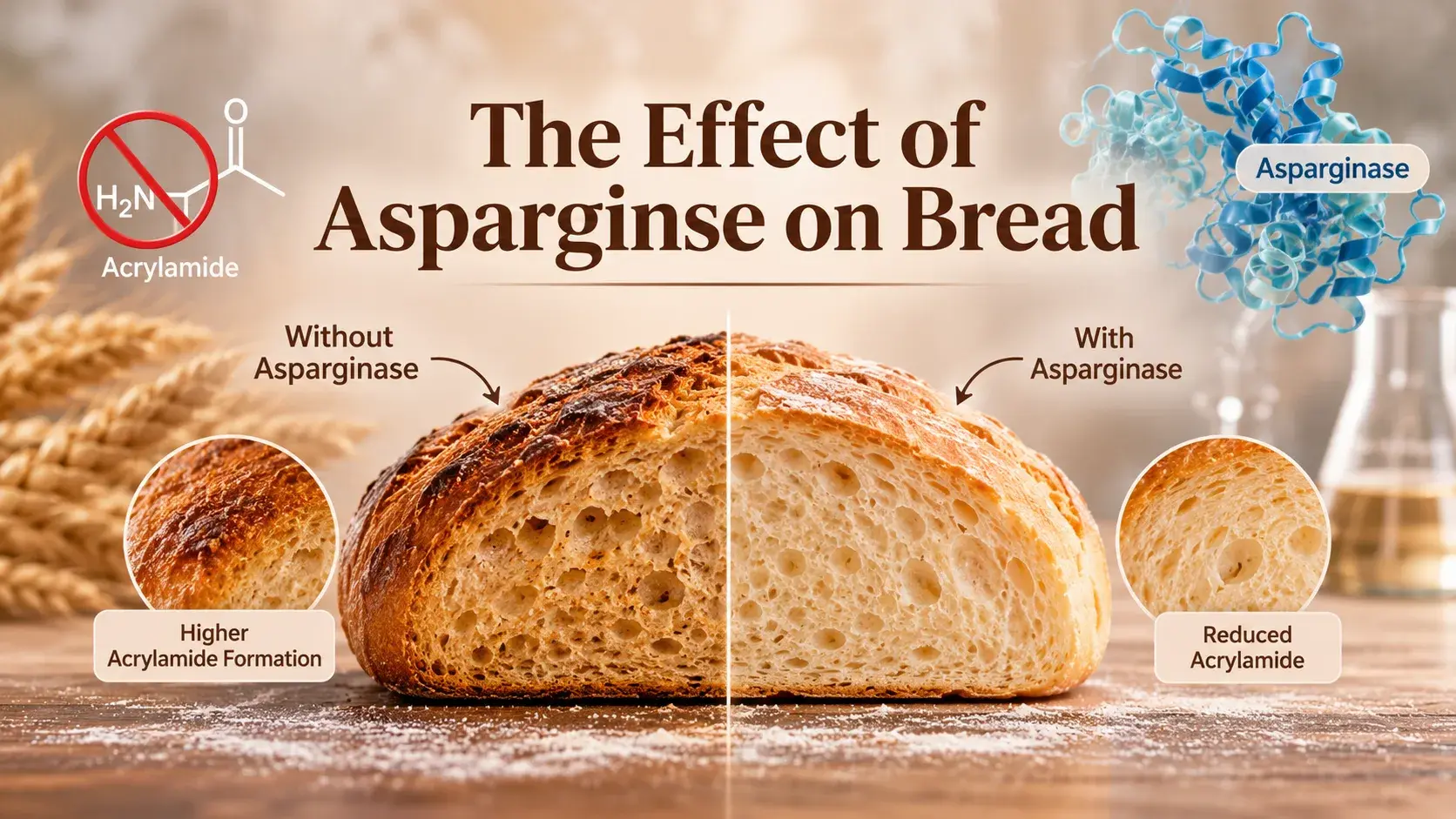
Effect of Asparaginase on Bread
The discovery of acrylamide in thermally processed, carbohydrate-rich foods transformed industrial cereal chemistry.

Is Dough a Liquid or a Solid? Physics of Herschel–Bulkley & Non-Newtonian Flow
When you look at a loaf of dough sitting on a baker’s bench, what do you see? A solid mass that holds its shape and can be molded by your hands?