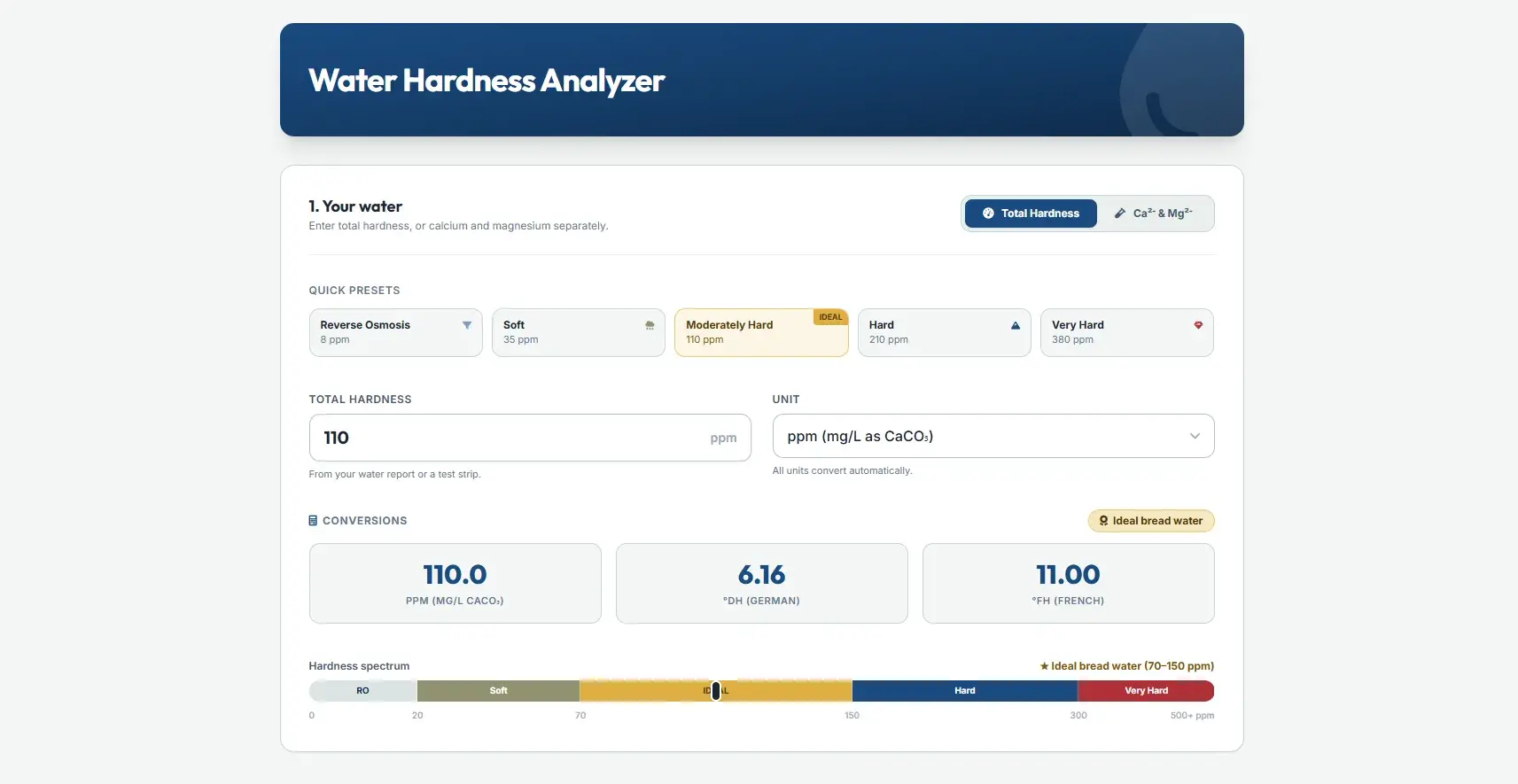
Water Hardness Analyzer
The Ingredient Bakers Forget: Your Tap Water
Every baker knows the basics: flour, water, yeast, salt. We fuss over protein percentages and starter hydration, but the water itself rarely gets a second thought.
Here’s the thing, though. The minerals in your tap water can change how your dough builds gluten, how fast it ferments, and even how brown your crust gets. If your dough keeps turning out sticky and slack, or your crumb comes out dense and tight, your water might be the culprit.
That’s where the Breadpedia Water Hardness Analyzer comes in. It’s a free interactive tool that helps home and professional bakers understand their water and what it means for their bread.
Why Minerals Matter
Water does far more than add moisture. It takes an active part in the chemistry of your dough:
- Calcium and gluten: Calcium strengthens the gluten network. Very soft water tends to give sticky, weak dough, while extremely hard water can leave it tight and hard to stretch.
- Magnesium and yeast: Yeast relies on magnesium to work well. Balanced minerals keep fermentation lively, but mineral-free water (like RO or distilled) slows it down.
- Minerals and crust color: Minerals affect enzyme activity, which changes the sugars available for browning and that golden crust.
For most bread, the sweet spot is moderately hard water, around 70-150 ppm. So where does yours land?
What the Analyzer Does
It takes the guesswork out of baking chemistry:
- Switch units freely: Enter your numbers in ppm, °dH (German degrees), °fH (French degrees), or mmol/L, and everything converts instantly.
- Enter what you have: Type in a total hardness figure from your water report or test strip, or add calcium and magnesium separately for a more detailed picture.
- See where you stand: A visual scale runs from reverse osmosis water (0-20 ppm) to very hard (300+ ppm), showing how close you are to the ideal baking range of 70-150 ppm.
- Know what it means for your dough: Get scores for overall dough compatibility, gluten handling, fermentation speed, and expected crust quality.
Take Control of Your Water
Before you blame your starter or your technique for a disappointing loaf, check the water. Open the Breadpedia Water Hardness Analyzer, enter your local water details, and get one step closer to consistent, bakery-quality bread.
Keep reading
All posts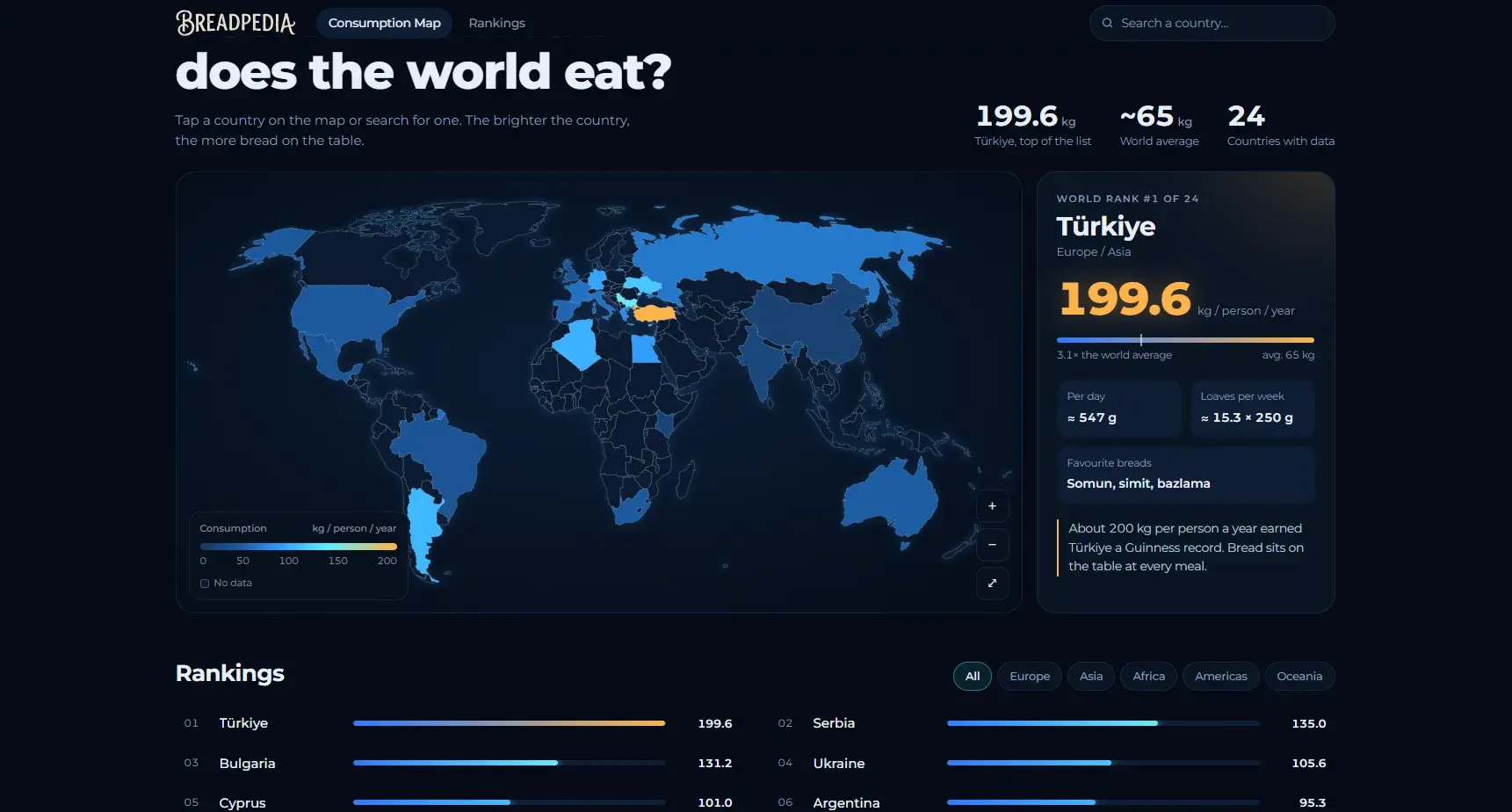
Bread Consumption Map
Few things beat the smell of fresh bread coming out of the oven. But how much of it actually makes it to the table? The answer might surprise you.
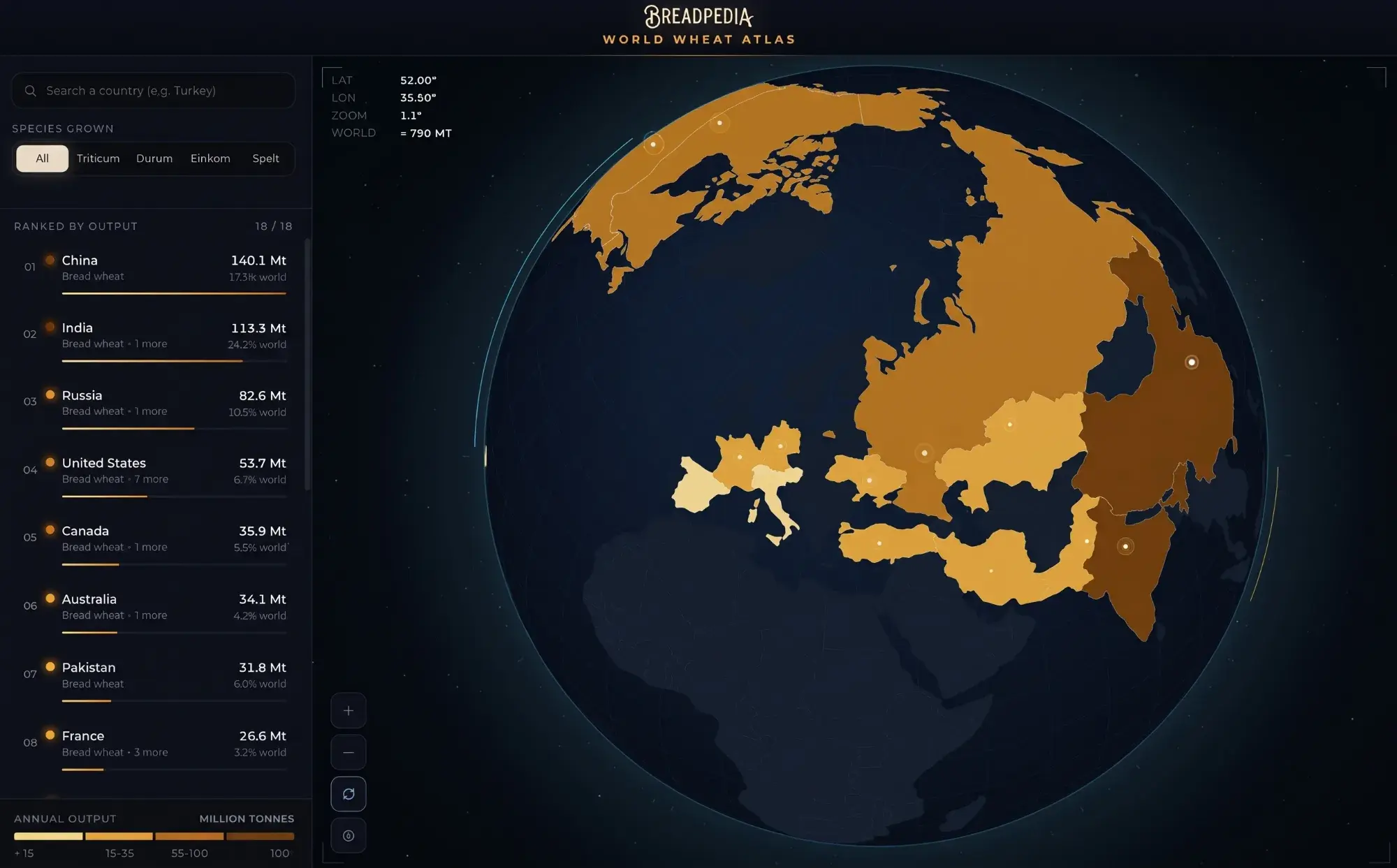
World Wheat Atlas
The World Wheat Atlas is a dynamic 3D digital globe that tracks and visualizes global wheat production.

Starch Retrogradation Analyzer
Few things are as inviting as the aroma of freshly baked bread with a crispy crust and a soft interior.