Glass Transition Temperature in Bread and the Science of Staling
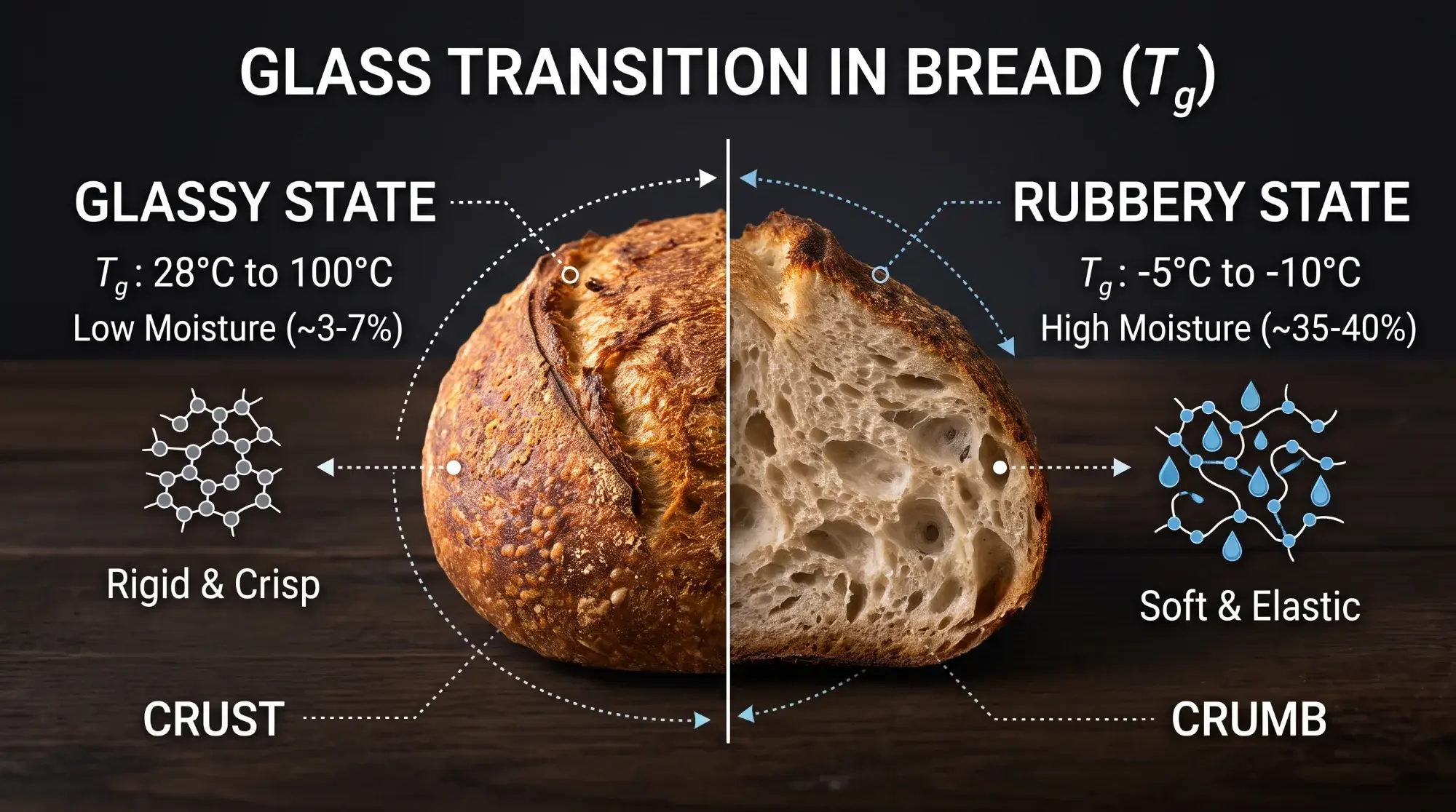
The aroma and texture of freshly baked bread—crispy on the outside, soft and pillowy on the inside is undoubtedly one of the most comforting culinary experiences. However, within just a few days, that crispy crust turns leathery and soft, while the fluffy crumb becomes dry, firm, and crumbly.
Did you know that behind this transformation lies Glass Transition Temperature (), a fundamental concept from polymer physics and food chemistry?
What is Glass Transition Temperature ()?
The glass transition temperature () is the critical temperature range where an amorphous (non-crystalline) polymeric material transitions from a hard/brittle glassy state to a flexible/soft rubbery state.
Bread is essentially a complex polymer matrix made of starch (amylose and amylopectin) and gluten proteins. In this matrix, water acts as a plasticizer a molecule that increases the mobility of polymer chains. As moisture content increases, decreases significantly; as moisture drops, rises.
Two Different Worlds in Bread: Crust vs. Crumb
Bread does not have a single glass transition temperature. Due to the vast difference in moisture content between the interior and exterior, the crust and the crumb exist in two distinct thermodynamic states:
1. Bread Crumb (The Soft Interior)
- Moisture Content: High (~35–40%).
- Glass Transition Temperature (): Approximately -5 °C to -10 °C.
- State at Room Temperature (25 °C): Because room temperature is well above the crumb's , the starch and protein network exists in a rubbery state. This gives the crumb its characteristic softness, elasticity, and spongy texture.
2. Bread Crust (The Hard Exterior)
- Moisture Content: Very low (~3–7%).
- Glass Transition Temperature (): Ranges from 28 °C to 100 °C, depending on local moisture levels.
- State at Room Temperature (25 °C): Because room temperature is below the crust's , the polymers remain locked in a glassy state. This vitrification provides the crust with its structural rigidity and signature crispness.
| Component | Moisture Content | Approx. TgT_gTg | Physical State at 25 °C |
|---|---|---|---|
| Crumb | High (~35–40%) | -5 °C to -10 °C | Rubbery / Soft |
| Crust | Low (~3–7%) | 28 °C – 100 °C | Glassy / Crisp |
| Critical Boundary | ~16% | 22 °C | Glassy / Rubbery Transition Boundary |
What Happens During Staling?
Two main physical mechanisms drive quality loss during storage:
- Moisture Migration (Crumb to Crust): Over time, water migrates from the wet crumb toward the dry crust. As the crust's moisture content rises above 16–18%, its drops below room temperature (25 °C). Transitioning from glassy to rubbery, the crust loses its crunch and becomes tough and leathery.
- Starch Retrogradation (Recrystallization): The starch gelatinized during baking (mainly amylopectin) slowly reorganizes back into an ordered crystalline structure over time. This recrystallization causes the crumb to firm up and lose its elasticity.
Why Refrigerating Bread is a Mistake
Many people store bread in the refrigerator (~4 °C) thinking it will stay fresh longer; in reality, refrigeration actually accelerates staling.
This occurs due to the kinetics of starch retrogradation. Starch crystallization rates peak at temperatures slightly above the rubbery matrix's . Since the crumb's is around -5 °C, a refrigerator at 4 °C provides the ideal "sweet spot" temperature for rapid starch recrystallization, causing the bread to turn firm much faster than it would at room temperature.
Tips for Keeping Bread Fresh
- Short-Term Storage (Room Temperature): Keep bread at 20–25 °C in a breathable container to balance moisture retention without causing rapid crust softening.
- Long-Term Storage (Freezer): Freezing bread (-18 °C) drops the temperature far below the crumb's (-5 °C). At this temperature, polymer chain mobility is immobilized, halting starch retrogradation.
- Reheating Stale Bread: Warming stale bread melts recrystallized amylopectin structures and redistributes moisture, temporarily restoring the soft, rubbery crumb texture.
Keep reading
All posts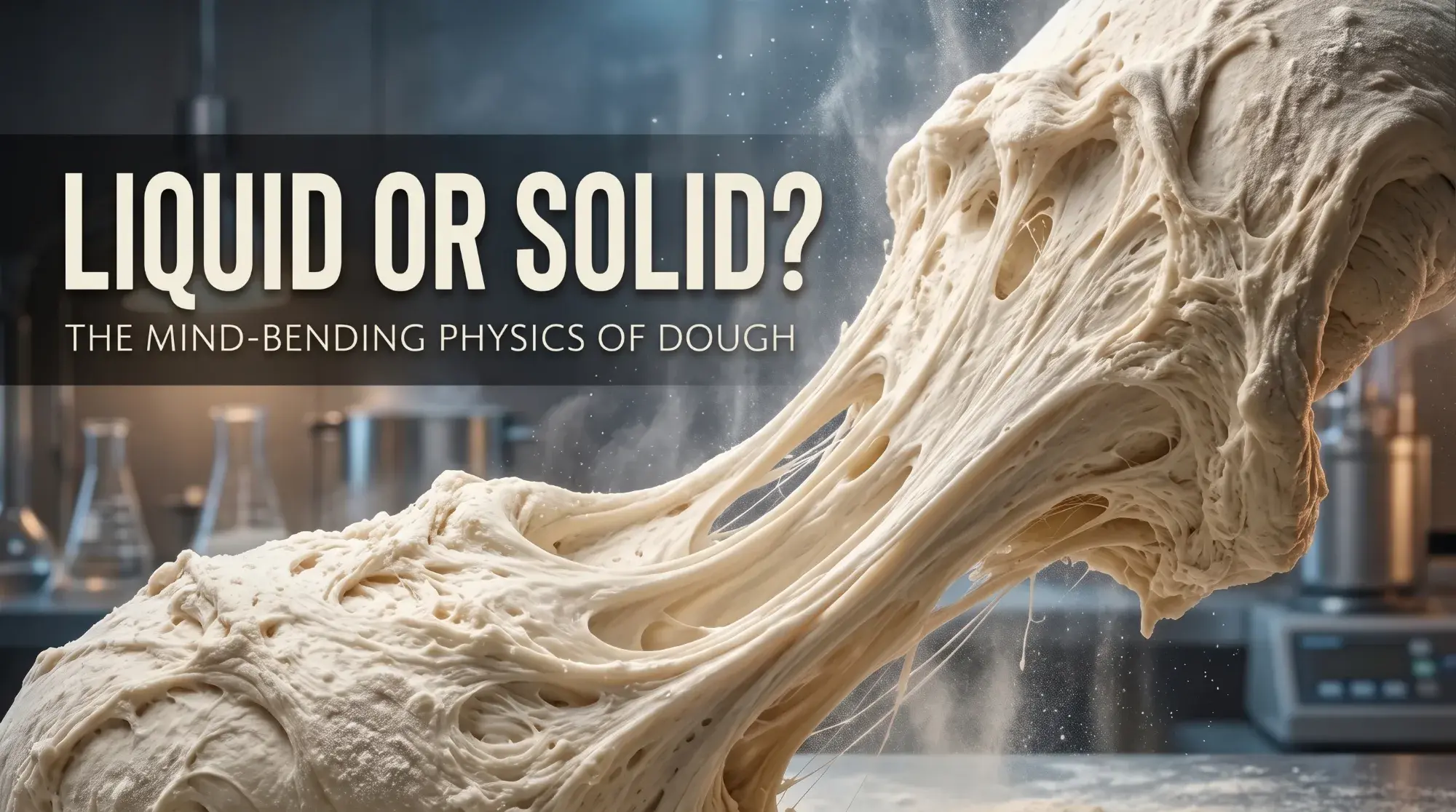
Is Dough a Liquid or a Solid? Physics of Herschel–Bulkley & Non-Newtonian Flow
When you look at a loaf of dough sitting on a baker’s bench, what do you see? A solid mass that holds its shape and can be molded by your hands?
Baking Through the Lens of AI: Measuring Bread Quality with Image Processing
Can you guess the crispiness, softness, crumb structure, and even the aroma of a slice of bread just by looking at it?
The UK Flour Fortification Mandate
Major updates are coming to the staple ingredients found in UK kitchens and grocery aisles.